Beer Can Dimensions: Sizes, Heights & Diameters Guide (2026)
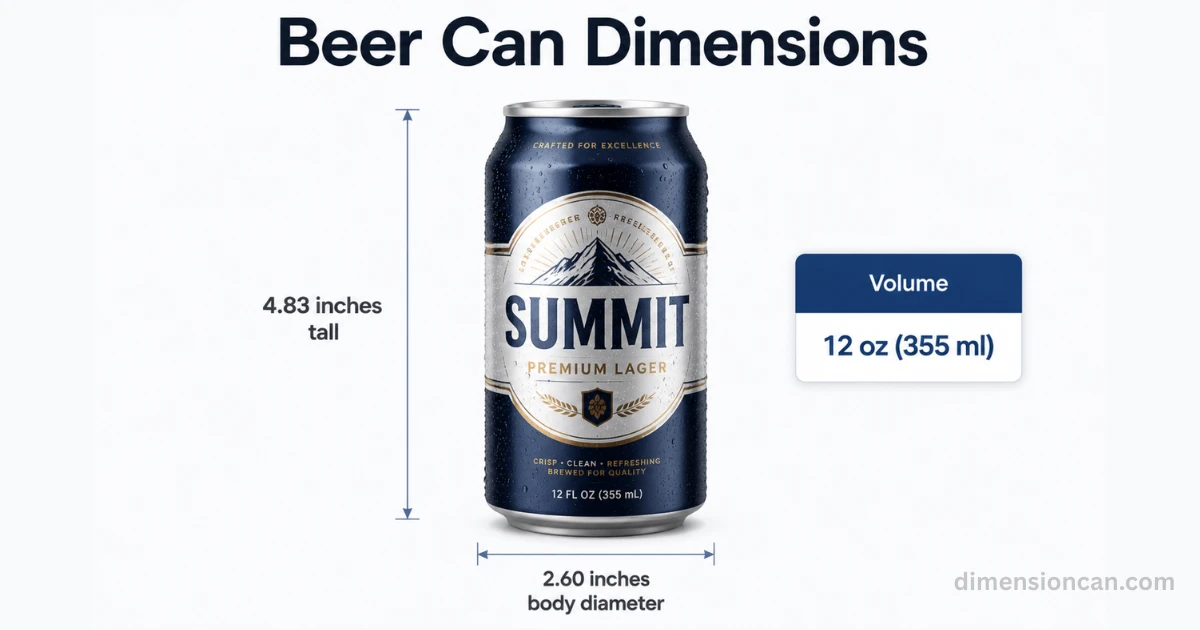
A standard 12 oz beer can measures
4.83 inches tall,
2.60 inches in body diameter, and holds
355 ml of beer.
That single size dominates over
70% of US beer can sales and has stayed unchanged since the
aluminum can became the industry standard in the 1960s.
Whether you are a brewer, retailer, designer, or just curious — knowing exact beer can dimensions helps with everything from label design to cooler planning to packaging decisions.
Standard Beer Can Dimensions (12 oz)
standard-beer-can-dimensions
The 12 oz standard beer can is the baseline for the entire industry. Every other format is measured against it.
12 oz Standard Can Height and Diameter
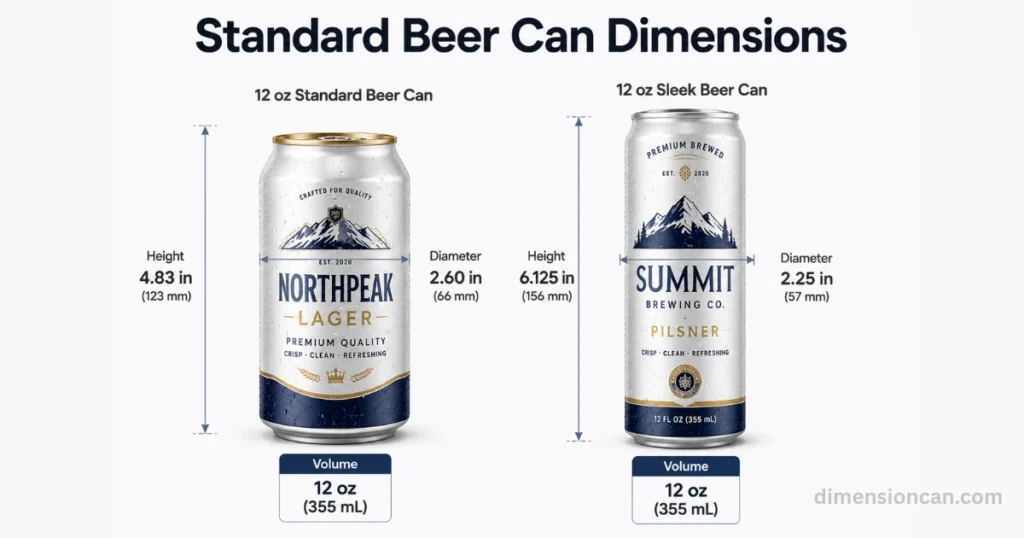
The standard 12 oz beer can height is 4.83 inches (123 mm). The body diameter measures 2.60 inches (66 mm). The lid diameter narrows to 2.13 inches (54 mm) — this neck-in design reduces aluminum use and lowers production cost.
The industry labels this lid size as “202” — meaning 2 and 2/16 inches. This numbering system is used across all major US beverage canning lines.
The circumference of a standard beer can body is 8.15 inches (207 mm). This number directly determines label width for wrap-around graphics.
This size fits every standard cup holder, six-pack carrier, cooler rack, and vending machine slot built in America — a key reason it has never changed.
12 oz Sleek Can Dimensions
The sleek 12 oz beer can holds the same 355 ml but looks completely different. It stands 6.125 inches (156 mm) tall with a narrower 2.25-inch (57 mm) diameter.
Hard seltzer brands like White Claw and Truly popularized this format. The taller, slimmer shape creates a premium look on retail shelves. It also provides more vertical label space for branding and design work.
The sleek format grew from 5% to over 20% market share between 2015 and 2023.
All Beer Can Sizes and Dimensions
all-beer-can-dimensions
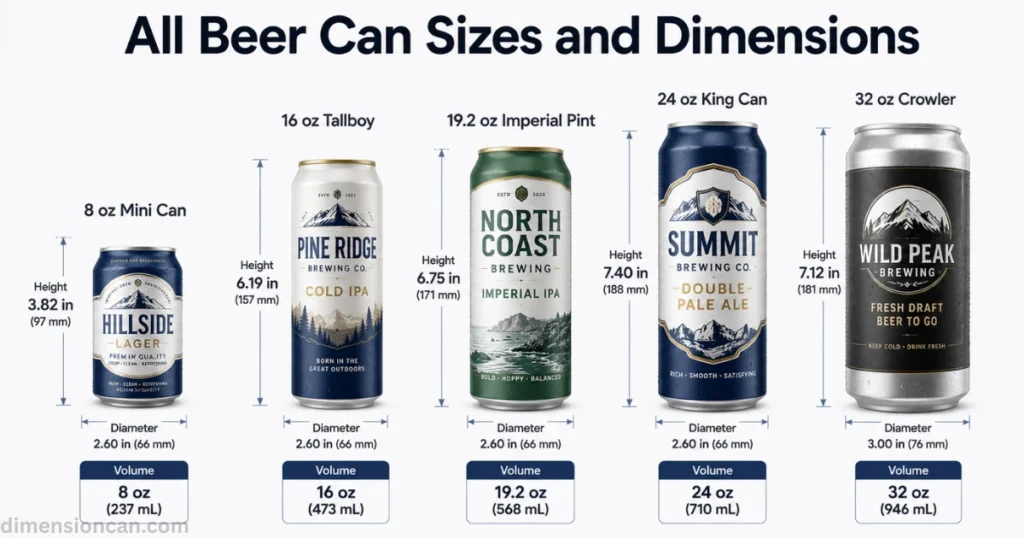
Beer can sizes span from the small 8 oz mini to the large 32 oz crowler.
8 oz Mini Beer Can Dimensions
The 8 oz mini beer can stands 3.82 inches (97 mm) tall with a 2.60-inch (66 mm) diameter. It holds 237 ml of liquid.
This smaller aluminum can format is used for high-ABV craft beers, variety packs, and portion-controlled tasting flights. Brands like Heineken and Modelo have used this size to attract health-conscious consumers who want a lighter serving without sacrificing experience.
16 oz Tallboy Beer Can Dimensions
The 16 oz tallboy stands 6.19 inches (157 mm) tall. The body diameter stays at 2.60 inches (66 mm) — identical to the 12 oz standard. Only the height changes.
How tall is a 16 oz tallboy? It is 1.36 inches taller than a standard 12 oz can — roughly three stacked quarters of difference. It holds 473 ml of beer.
The tallboy can accounts for nearly 20% of convenience store beer sales in the US. Craft breweries like Sierra Nevada and Stone Brewing use it heavily for IPAs, stouts, and seasonal releases.
19.2 oz Imperial Pint Beer Can Dimensions
The 19.2 oz imperial pint can stands 6.75 inches (171 mm) tall with the standard 2.60-inch diameter. It holds a true 568 ml pint.
This size became popular after 2018 when craft breweries needed a larger single-serve format that still fit standard production lines without equipment changes.
24 oz King Can Dimensions
The 24 oz beer can — commonly called the “king can” — stands 7.40 inches (188 mm) tall. The diameter stays at 2.60 inches (66 mm). It holds 710 ml of beer.
How tall is a 24 oz beer can? At 7.40 inches, it is nearly twice the height of a standard 12 oz can. This size dominates the malt liquor and value beer segments.
32 oz Crowler Beer Can Dimensions
The 32 oz crowler measures 7.12 inches (181 mm) tall with a wider 3.00-inch (76 mm) diameter. It holds 946 ml — exactly one quart of beer.
The crowler uses a larger 300 end size instead of the standard 202. It requires a specialized crowler seaming machine to seal on-site at breweries and taprooms. Over 3,000 US craft breweries now use this system.
The wider diameter gives the crowler better oxygen barrier performance than traditional glass growlers, keeping beer fresher longer after sealing.
Slim vs Sleek vs Standard Beer Can Dimensions
slim-vs-sleek-vs-standard-beer-can-dimensions
These three can profiles look similar on a store shelf but serve very different purposes.
Standard Profile
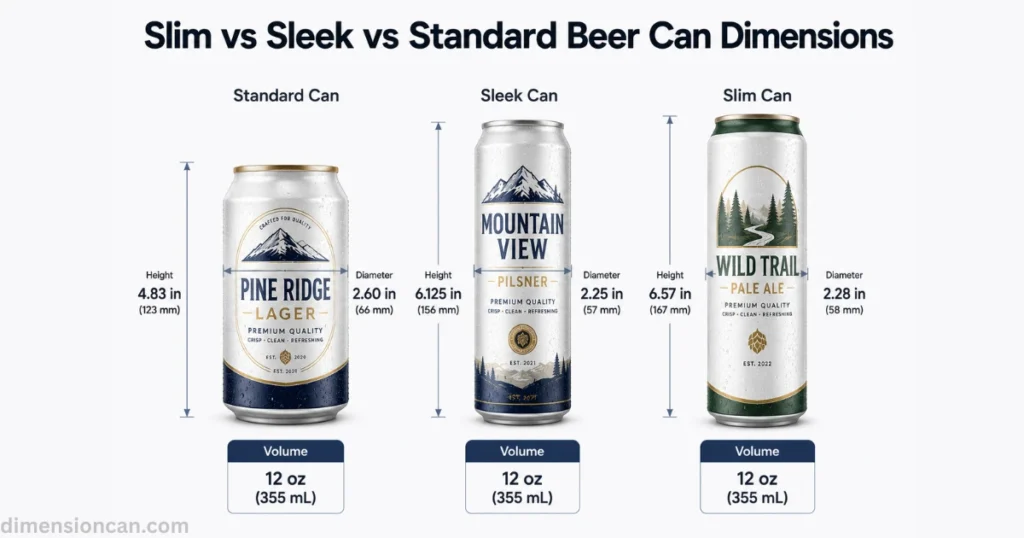
The standard beer can profile uses a 2.60-inch body diameter and stands 4.83 inches tall for the 12 oz size.
The height-to-diameter ratio of approximately 1.86:1 provides excellent stacking stability during transport and warehouse storage.Budweiser, Miller Lite, and Coors Light all use this exact profile.
Sleek Can Dimensions
The sleek beer can measures 6.125 inches tall (for 12 oz) or 7.12 inches tall (for 16 oz) with a 2.25-inch diameter. The taller, narrower body creates a 2.7:1 height-to-diameter ratio.
White Claw, Truly, and High Noon all use the sleek format to signal a modern, health-conscious identity.
Slim Can Dimensions
The slim beer can stands 6.57 inches (167 mm) tall with a narrower 2.28-inch (58 mm) diameter. Its circumference measures 7.17 inches — noticeably smaller than the standard 8.15 inches.
The narrower grip feel also creates a different ergonomic experience from standard cans.
Beer Can Label Size Dimensions
Can Size
Label Width (in)
Label Height (in)
Wrap Type
8 oz Mini
8.00
2.25
Full Wrap
12 oz Standard
8.125
3.625
Full Wrap
12 oz Half Wrap
6.25
3.625
Partial
16 oz Tallboy
8.125
5.00
Full Wrap
16 oz Half Wrap
6.25
5.00
Partial
32 oz Crowler
10.00
6.00
Full Wrap
Beer Can Dimensions by Region (USA vs International)
Beer can sizes are not universal.
USA Standard Beer Can Sizes (ANSI/TTB Standards)
American beer can dimensions follow ANSI standards maintained by the Can Manufacturers Institute (CMI). The Alcohol and Tobacco Tax and Trade Bureau (TTB) requires volume accuracy within 0.5% of the labeled amount.
The 12 oz (355 ml) format holds over 70% US market share. Regional preferences also vary — the South and Midwest favor 12 oz standard packs, while urban markets show stronger demand for 16 oz and 24 oz single-serve formats.
UK, Australia and Asia Beer Can Sizes
Region
Standard Size
Height (in)
Diameter (in)
oz Equivalent
Market Share
USA
355 ml (12 oz)
4.83
2.60
12.0 oz
72%
UK / Ireland
440 ml
6.50
2.60
14.9 oz
61%
Europe
500 ml
6.70–6.90
2.60
16.9 oz
58%
Australia
375 ml
4.90
2.60
12.7 oz
68%
Japan / South Korea
350 ml
4.80
2.60
11.8 oz
54%
FAQs — Beer Can Dimensions
What are the dimensions of a standard beer can?
A standard 12 oz beer can measures 4.83 inches tall (123 mm), 2.60 inches in body diameter (66 mm), and 2.13 inches at the lid (54 mm). It holds 355 ml and has a body circumference of 8.15 inches.
How tall is a 12 oz beer can in inches?
A 12 oz beer can is 4.83 inches tall. That equals 12.3 centimeters or 123 millimeters. This height has been the US industry standard since the aluminum beverage can replaced steel in the 1960s.
What is the diameter of a beer can?
The standard beer can diameter is 2.60 inches (66 mm) at the body. The lid narrows to 2.13 inches (54 mm). Sleek cans measure 2.25 inches and slim cans measure 2.28 inches in diameter.
How tall is a 16 oz tallboy beer can?
A 16 oz tallboy stands 6.19 inches tall (157 mm). It keeps the same 2.60-inch diameter as the standard 12 oz can. Only the height increases — by approximately 1.36 inches.
Is a tallboy 16 oz or 24 oz?
A tallboy is 16 oz (473 ml). It stands 6.19 inches tall. The 24 oz format is separately called a king can — not a tallboy. The two terms are often confused but refer to completely different can sizes.
How tall is a 24 oz beer can?
A 24 oz king can stands 7.40 inches tall (188 mm). The body diameter stays at 2.60 inches. It holds 710 ml of beer and is the largest single-serve format found in most US convenience stores.
What size label fits a 12 oz beer can?
A 12 oz beer can takes a label that is 8.125 inches wide. Height options run from 3.625 inches (standard full wrap) to 6.25 inches (half wrap). Always measure your specific can before printing — post-2020 supply chain variations introduced narrower 207-diameter cans requiring a 7.65-inch label width.
How do beer can sizes vary internationally?
The US standard is 12 oz (355 ml). Europe uses 330 ml and 500 ml. The UK and Ireland favor 440 ml. Japan and South Korea use 350 ml. Australia uses 375 ml. Physical dimensions are similar across regions but volume differences require label and regulatory adjustments for each market.
What is a crowler and how big is it?
A crowler is a 32 oz (946 ml) aluminum can sealed on-site at craft breweries. It measures 7.12 inches tall (181 mm) with a wider 3.00-inch diameter (76 mm). It uses a 300 end size instead of the standard 202 and provides better freshness than traditional glass growlers.
Are Budweiser and Coors cans the same size?
Yes. Budweiser, Miller Lite, and Coors Light all use the standard 12 oz can measuring 4.83 inches tall × 2.60 inches in diameter. This shared sizing ensures full compatibility across retail shelf systems, distributor pallets, and automated packaging lines nationwide.
Use the interactive Can Dimension Calculator below to calculate can height, diameter, capacity, and volume in seconds.
James Walker is a content researcher and writer specializing in dimensions, measurements, size comparisons, and conversion topics. He creates clear, practical, and easy-to-understand guides that help readers visualize and understand real-world measurements.