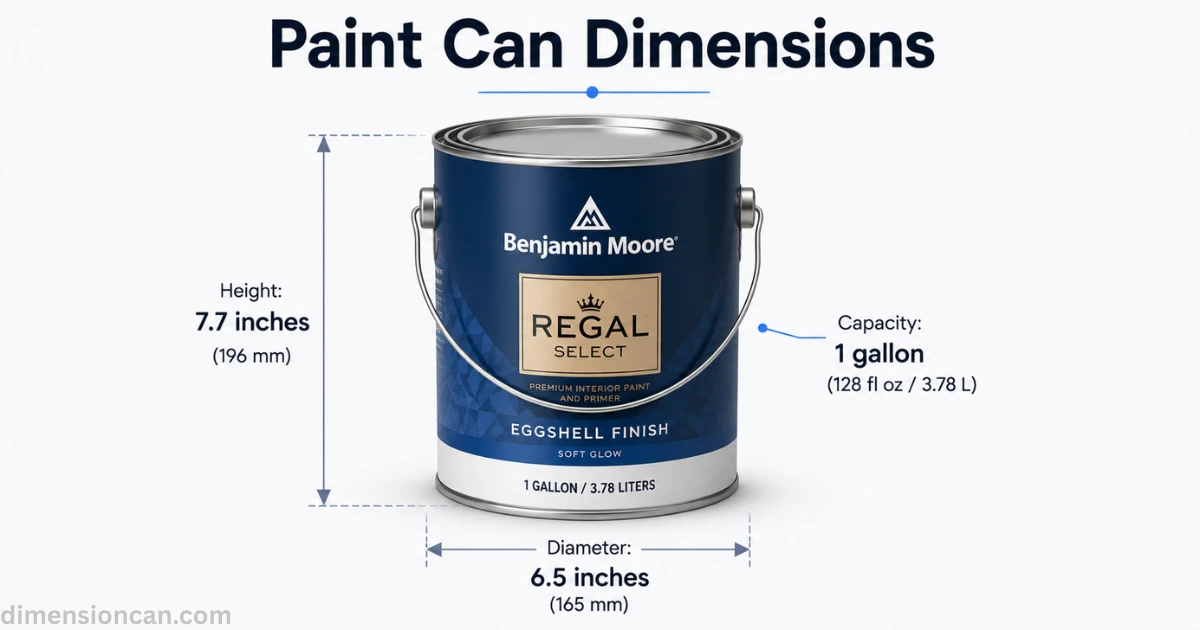
Standard paint cans come in several sizes, but the most common 1-gallon paint can measures approximately 7.7 inches tall and 6.5 inches in diameter. This size has been the industry standard for decades and is widely used for interior, exterior, and specialty paints across North America.
This guide breaks down every paint can size, from the tinyquarter-pint sample to the 5-gallon bucket. You’ll get exact height, diameter, and coverage numbers, plus a simple way to pick the right size without guessing.
Paint Can Dimensions Chart (All Standard Sizes)
Paint Can Sizes Table
Paint Can Size
Height
Diameter
Volume
Coverage (1 Coat)
Quarter Pint
2.0″ – 2.13″
2.38″ – 2.5″
4 fl oz
~10–12 sq ft
Half Pint
2.88″ – 3.0″
2.88″ – 3.0″
8 fl oz
~25 sq ft
1 Pint
3.94″ – 4.0″
3.44″ – 3.5″
16 fl oz
~40–50 sq ft
1 Quart
4.75″ – 5.0″
4.25″ – 4.3″
32 fl oz
~87–100 sq ft
Half Gallon
5.38″ – 5.5″
5.88″ – 6.0″
64 fl oz
~200 sq ft
1 Gallon
7.5″ – 7.68″
6.5″ – 6.63″
128 fl oz
~350–400 sq ft
5 Quart
9.5″ – 9.63″
6.5″ – 6.63″
160 fl oz
~500 sq ft
5 Gallon
14.5″ – 15.0″
11.91″ – 12.0″
640 fl oz
~1,750–2,000 sq ft
These numbers reflect exterior dimensions, meaning the full can with the lid on. Interior space runs slightly smaller because of metal or plastic wall thickness, which usually sits between 0.01 and 0.015 inches.
Quarter Pint and Half Pint Paint Can Dimensions
quarter-pint-half-pint-paint-cans-dimensions
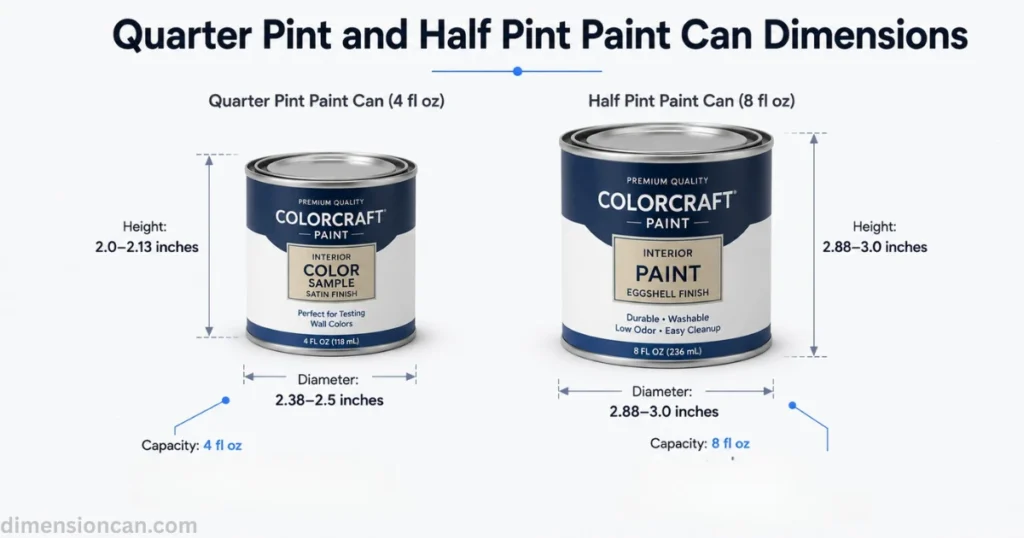
The quarter-pint can is the smallest size you’ll find on a shelf. It stands roughly 2.0 to 2.13 inches tall with a 2.38 to 2.5-inch diameter, holding just 4 fluid ounces.
Stores sell these mainly as color samples. You can paint a small swatch on your wall and judge the shade in real lighting before committing to a bigger can.
The half-pint can doubles that volume to 8 fluid ounces. It measures about 2.88 to 3.0 inches in both height and diameter, making it nearly cube-shaped. This size handles trim touch-ups, scuffed baseboards, or a single chair refinish.
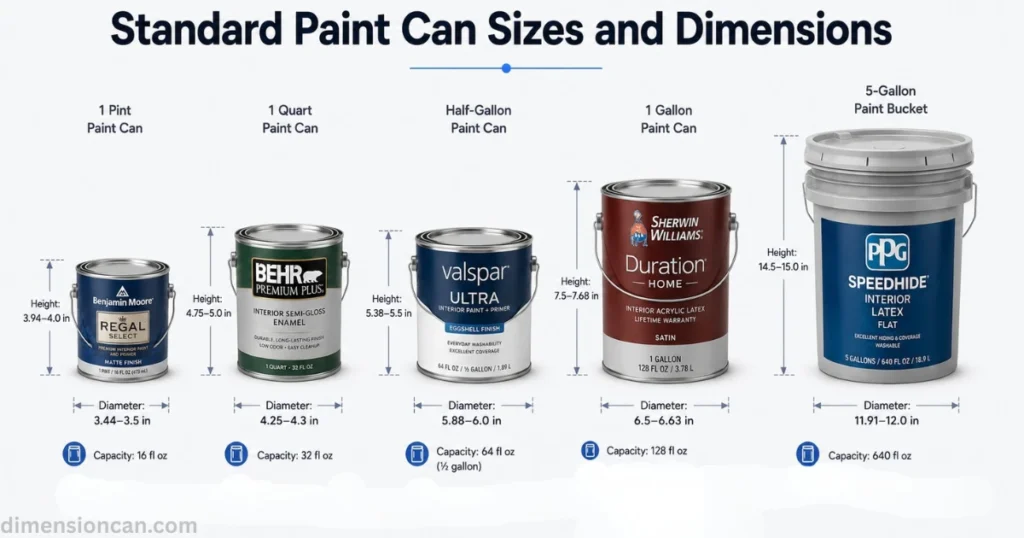
A 1-pint paint can stands 3.94 to 4.0 inches tall with a 3.44 to 3.5-inch diameter. It holds 16 fluid ounces, enough to cover 40 to 50 square feet with one coat.
This size is the sweet spot for moderate repairs. Contractors often grab a pint when patching drywall sections or repainting a door without opening a full quart.
1 Quart Paint Can Dimensions
The quart-size paint can measures 4.75 to 5.0 inches tall with a 4.25 to 4.3-inch diameter. Inside sits 32 fluid ounces of paint, covering roughly 87 to 100 square feet.
Quarts are the go-to size for accent walls and small rooms. One quart typically covers an 8×10 foot wall with two coats, which is why DIYers keep several quart cans stocked for quick color changes.
Half-Gallon Paint Can Dimensions
A half-gallon paint can stands only 5.38 to 5.5 inches tall, yet its diameter jumps to 5.88 to 6.0 inches. That’s wider than a quart but shorter than you’d expect for double the volume.
Manufacturers design it this way for stability. A wider base with a shorter body resists tipping far better than a tall, narrow can would at the same volume.
1 Gallon Paint Can Dimensions
The 1-gallon paint can is the industry standard for home painting. It stands 7.5 to 7.68 inches tall with a 6.5 to 6.63-inch diameter, holding 128 fluid ounces — enough for 350 to 400 square feet per coat.
Manufacturers label this size with the industry code 603 × 708. That number isn’t random. It means a 6-3/16 inch diameter by 7-11/16 inch height, measured with the lid sealed on. Retailers and bulk buyers use this code to compare specs across brands without measuring each can by hand.
A full gallon weighs 10 to 12 pounds, depending on the paint’s formula and density. That weight, combined with the molded metal handle, is why most gallon cans are designed to be carried with one hand.
5-Gallon Paint Bucket Dimensions
The 5-gallon paint bucket is built for scale. It measures 14.5 to 15.0 inches tall with an 11.91 to 12.0-inch diameter, holding 640 fluid ounces of paint.
Contractors favor this size because it covers 1,750 to 2,000 square feet per coat, enough to prime and paint a full 12×12 room without a single refill.
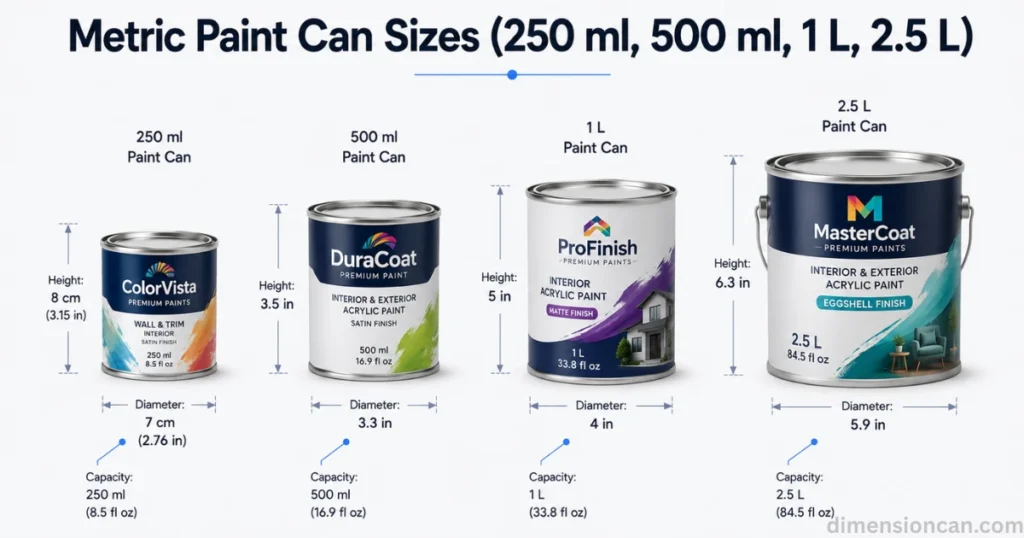
A 250ml paint tin measures about 7 cm (2.76 inches) in diameter and 8 cm (3.15 inches) tall. It holds roughly 8.5 fluid ounces, similar to a half-pint can, and works well for color sampling.
A 500ml paint can stands close to 3.5 inches tall with a 3.3-inch diameter. This size holds about 16.9 fluid ounces, slightly more than a US pint, and covers roughly 60 square feet per coat.
A 1-liter paint can measures around 5 inches tall and 4 inches in diameter. It holds 33.8 fluid ounces, landing between a US quart and a half-gallon, with coverage near 120 square feet.
The 2.5-liter tin is Europe’s most common mid-size container. It stands about 6.3 inches tall with a 5.9-inch diameter, holding 84.5 fluid ounces — close to a US gallon but not quite matching it.
1 US gallon equals 3.785 liters, not 4. That’s roughly a 5.5% gap. If you’re comparing a metric 4-liter can to a US gallon, the metric can actually holds slightly more paint despite looking like a similar size.
Metal vs. Plastic Paint Can Dimensions
Not all paint cans are built from the same material, and that changes the numbers slightly.
Metal paint cans use a double-seamed lid, which adds about 0.15 to 0.18 inches to the total height compared to the can body alone. This seam also gives metal cans a slight edge in solvent resistance, which is why oil-based paints and strong solvents usually ship in metal.
Plastic paint cans run 0.1 to 0.2 inches shorter than their metal counterparts at the same volume, while keeping the same diameter. They’re common for latex and water-based paints, and their main advantage is weight — plastic cans are lighter to ship and resist denting better than thin-gauge metal.
This height difference matters more than it seems. If you’re planning shelf space or stacking cans in a garage, a small height variance across a dozen cans adds up fast. Always check the actual can height, not just the labeled volume, when planning tight storage.
How to Choose the Right Paint Can Size for Your Project
Picking a paint can size doesn’t need to be complicated.
Here’s a simple breakdown:
Touch-ups and color testing: quarter-pint or half-pint
Trim, doors, single furniture pieces: 1 pint
Accent wall or small room (one coat): 1 quart
Medium bedroom or bathroom: half-gallon to 1 gallon
Full room, two coats: 1 gallon
Whole-house or multi-room job: 5-gallon bucket
A good rule of thumb: measure your wall square footage, then add 10% extra for trim, edges, and a possible second coat. Paint coverage estimates assume smooth surfaces, so textured walls or dark-to-light color changes will eat into that buffer fast.
FAQ’s About Paint Can Dimensions
What are the sizes of paint cans?
Standard paint can sizes run from a quarter-pint (4 oz) up to a 5-gallon bucket (640 oz). The most common sizes for home use are 1 pint, 1 quart, and 1 gallon.
What is the standard size of a can of paint?
The 1-gallon can is the industry standard. It measures 7.5 inches tall with a 6.5-inch diameter and holds 128 fluid ounces, enough to cover 350 to 400 square feet per coat.
How big is a 500ml paint can?
A 500ml paint can stands about 3.5 inches tall with a 3.3-inch diameter. It holds roughly 16.9 fluid ounces and covers around 60 square feet per coat.
How big is a 250ml tin of paint?
A 250ml paint tin measures about 8 cm (3.15 inches) tall with a 7 cm (2.76-inch) diameter. It holds close to 8.5 fluid ounces, making it ideal for small color samples.
Conclusions
Knowing your paint can dimensions ahead of time saves you a wasted trip and wasted paint. Match the can size to your wall area, double-check the material if storage space is tight, and you’ll buy exactly what the job needs — nothing more, nothing less.
Use the interactive Can Dimension Calculator below to calculate can height, diameter, capacity, and volume in seconds.
James Walker is a content researcher and writer specializing in dimensions, measurements, size comparisons, and conversion topics. He creates clear, practical, and easy-to-understand guides that help readers visualize and understand real-world measurements.