Food Can Dimensions: Sizes, Heights & Diameters (2026)
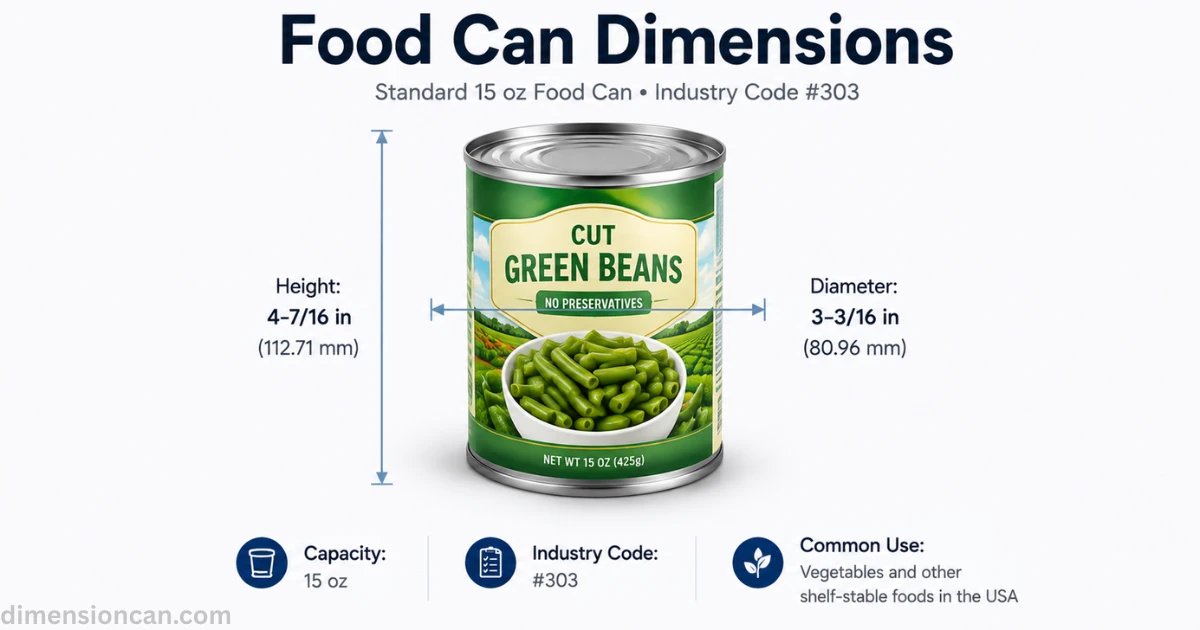
A 15 oz food can measures 3-3/16 inches in diameter and 4-7/16 inches tall. This is the most common vegetable can size in the USA and uses the #303 industry code.
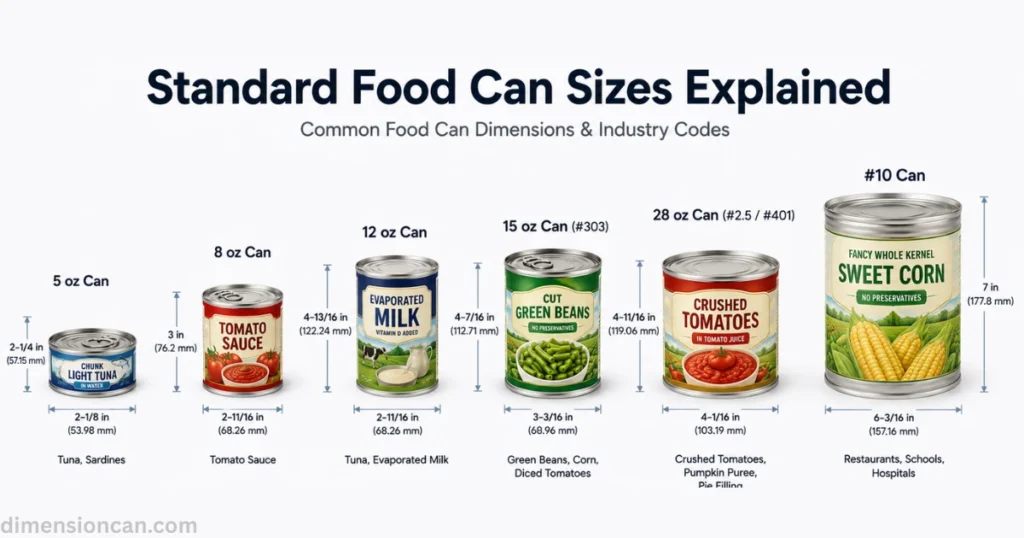
Food can dimensions range from a tiny 5 oz tuna can to a massive #10 bulk can. Each size has an exact diameter, height, and volume. These numbers matter for pantry storage, recipe scaling, and bulk buying.
Food Can Dimensions Chart
Can Size Reference Table
Can Name
Diameter
Height
Volume (fl oz)
Cups
Common Uses
5 oz
2-1/8″
2-1/4″
5
0.625
Tuna, sardines
8 oz
2-11/16″
3″
8
1
Tomato sauce, small soups
#1 (Picnic)
2-11/16″
4″
10–12
1.25
Condensed soup, fruit
12 oz
2-11/16″
4-13/16″
12
1.5
Tuna, evaporated milk
14 oz
3-1/8″
4-3/8″
14
1.75
Specialty sauces
15 oz (#303)
3-3/16″
4-7/16″
15
1.875
Vegetables, beans
16 oz
3-3/16″
4-13/16″
16
2
Corn, tomatoes
#2.5 (28 oz)
4-1/16″
4-11/16″
26–28
3.25–3.5
Pie filling, stews
#3
4-1/4″
4-7/8″
46
5.75
Fruit juice
#5
5-1/8″
5-7/8″
56
7
Foodservice chili, sauce
#10
6-3/16″
7″
109–117
13
Bulk vegetables, fruit
Standard Food Can Sizes Explained
standard-food-cans-dimensions
15 oz Can Dimensions (#303)
The 15 oz can is the workhorse of the American pantry. It stands 4-7/16 inches tall with a 3-3/16 inch diameter. Grocery shelves stock more of this size than any other food can dimension.
Green beans, corn, and diced tomatoes almost always ship in this format.
#10 Can Dimensions
A #10 can is built for volume, not the home kitchen. It measures 6-3/16 inches across and 7 inches tall, holding 109 to 117 fluid ounces — close to 13 cups. According to packaging industry estimates, #10 cans make up roughly 30% of all foodservice packaging in the United States.
Restaurants, school cafeterias, and hospitals depend on this bulk can size daily.
28 oz Can Dimensions (#2.5/#401)
The 28 oz can, coded #2.5 or #401, measures 4-1/16 inches in diameter and 4-11/16 inches tall. This family-size can holds nearly 3.5 cups, roughly double a standard 15 oz can.
Crushed tomatoes, pumpkin puree, and pie filling commonly use this larger can format.
12 oz & 16 oz Can Dimensions
A 12 oz can measures 2-11/16 inches wide and 4-13/16 inches tall. This narrow, tall shape is common for tuna and evaporated milk.
A 16 oz can shares the exact 3-3/16 inch diameter of a 15 oz can but stands taller at 4-13/16 inches. The extra height adds about one more fluid ounce without changing the shelf footprint.
5 oz & 8 oz Can Dimensions (Specialty Sizes)
The 5 oz can is the smallest standard food can, at just 2-1/8 inches diameter and 2-1/4 inches tall. It fits tuna and sardines perfectly.
An 8 oz can measures 2-11/16 inches across and 3 inches tall. Tomato sauce brands favor this compact can dimension for single-recipe portions.
The U.S. canning industry uses a three-digit code system that has stayed consistent for over a century. The first digit shows whole inches. The next two digits show sixteenths of an inch.
So 303 means 3 and 3/16 inches. A code like 401 means 4 and 1/16 inches. These codes describe the can’s diameter, not its volume or weight.
Diameter vs. Height in the Code
A full can size code lists diameter first, then height. The code 603×700 breaks down as 6-3/16 inches diameter by exactly 7 inches tall — this is the #10 can.
Reading both halves correctly prevents costly ordering mistakes for bulk buyers and commercial kitchens.
Food Can Dimensions vs. Cup & Recipe Measurements
Can Size to Cups Conversion Table
Recipes often call for “one can” without specifying size.
A 15 oz can equals roughly 1.875 cups. A 16 oz can equals exactly 2 cups. A 28 oz can equals about 3.5 cups. A #10 can equals close to 13 cups.
These cup conversions help home cooks scale recipes without guessing.
Substituting One Can Size for Another in a Recipe
Running short on the exact can size a recipe asks for is common. A 16 oz can can replace a 15 oz can with almost no taste difference — the gap is just one fluid ounce.
Two 15 oz cans roughly equal one 28 oz can, making substitution simple for soups, stews, or sauces. For #10 cans, six to seven standard 15 oz cans approximate the same volume.
Two-Piece vs. Three-Piece Can Construction
A two-piece can forms from one sheet of metal drawn into a cup shape, with only the top lid added later. This seamless design resists pressure well, making it ideal for soups, beverages, and acidic foods like tomatoes.
A three-piece can uses a rolled cylinder with a welded side seam, plus separate top and bottom lids. This construction dominates solid food packaging — beans, corn, and whole vegetables — because manufacturing it costs less.
How Construction Affects Actual Dimensions
Two-piece cans hold tighter tolerances, often within half a millimeter of the stated size. Three-piece cans can vary by 1 to 2mm at the seam. Height stays more consistent across both types since the top and bottom lids set that measurement, not the side seam.
Food can dimensions range from 2-1/8 inches to 6-3/16 inches in diameter, and 2-1/4 inches to 7 inches in height, depending on the size. The most common retail size, the 15 oz can, measures 3-3/16 inches by 4-7/16 inches.
What is the standard size of a can?
There’s no single universal standard can size, but the 15 oz (#303) can is the most common in American grocery stores. For commercial kitchens, the #10 can is the standard bulk size.
How big is a 303 can?
A 303 can measures 3-3/16 inches in diameter and 4-7/16 inches tall, holding 15 to 17 fluid ounces. The code 303 itself just means 3 and 3/16 inches.
What is the size of a tin can?
Tin can sizes vary by use, ranging from a 2-1/8 inch tuna can to a 6-3/16 inch bulk #10 can. Most household tin cans fall between 2-11/16 inches and 4-1/16 inches in diameter.
Use the interactive Can Dimension Calculator below to calculate can height, diameter, capacity, and volume in seconds.
James Walker is a content researcher and writer specializing in dimensions, measurements, size comparisons, and conversion topics. He creates clear, practical, and easy-to-understand guides that help readers visualize and understand real-world measurements.