Beer Can Label Sizes: Measurements, Formulas & Printing
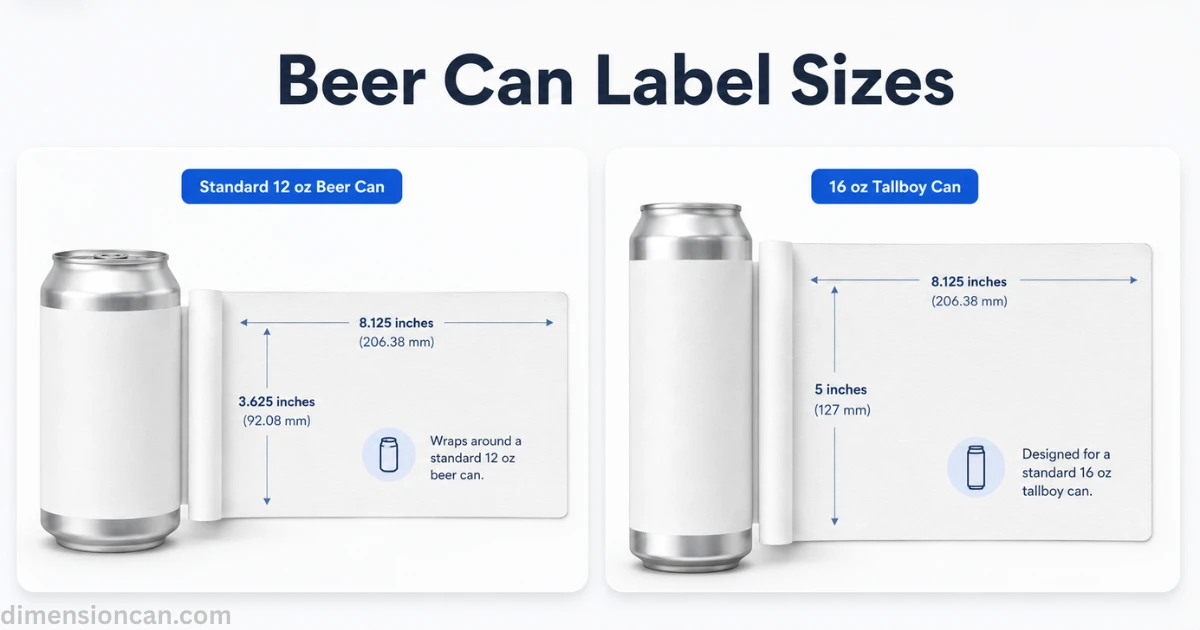
A standard 12 oz beer can label measures 8.125 inches wide by 3.625 inches tall. A 16 oz tallboy label measures 8.125 inches wide by 5 inches tall.
Knowing the exact can label size before you send files to print saves money, time, and a lot of frustration.
Standard Beer Can Label Dimensions (12 oz & 16 oz)
12 oz Beer Can Label Size (Full, Half & Optimal Wrap)
12oz-beer-cans-label-dimensions
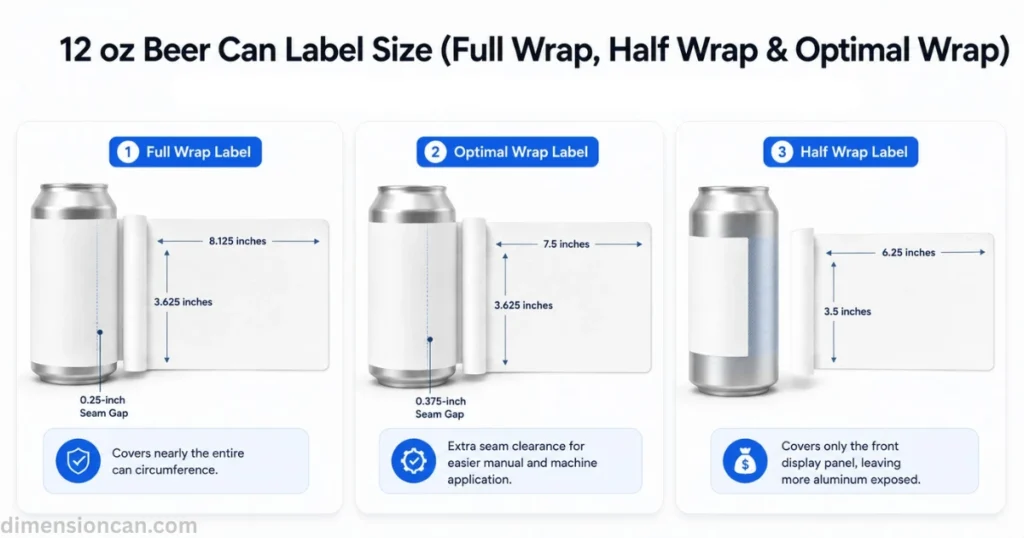
A full wrap label for a 12 oz can runs 8.125 inches wide by 3.625 inches tall. This covers nearly the entire can circumference, leaving a small 0.25-inch gap where the two ends meet.
A half wrap label measures 6.25 inches wide by 3.5 inches tall. It only covers the front panel, so more of the bare aluminum shows through. Breweries pick this style to cut material costs on smaller batch runs.
An optimal wrap sits in between at 7.5 inches wide by 3.625 inches tall. This size leaves a bit more breathing room at the seam, which makes hand application and machine application both easier.
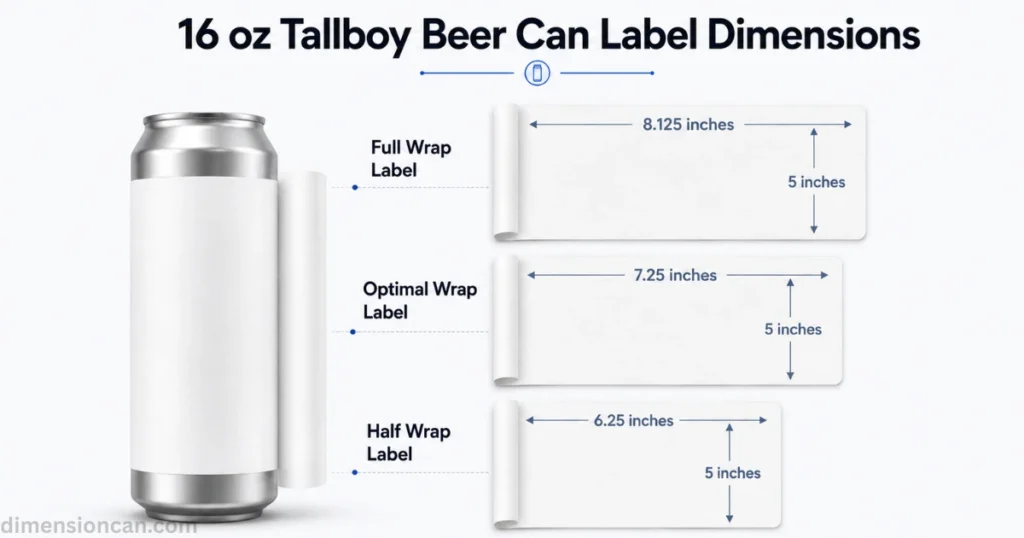
The 16 oz tallboy shares the same 211 diameter as the 12 oz can. Only the height changes. A full wrap tallboy label measures 8.125 inches wide by 5 inches tall.
That extra 1.375 inches of vertical space gives craft breweries more room for artwork, brand story, and ingredient details.
Half wrap tallboy labels run 6.25 inches wide by 5 inches tall. Optimal wrap sizing lands at 7.25 inches wide by 5 inches tall.
Beer Can Diameter Codes (211 vs 207) and Why They Affect Label Size
What Is a 211 Can?
A 211 can has a top diameter of 2 and 11/16 inches, or 2.6875 inches in decimal form. This is the backbone measurement behind nearly every standard beer can label sold in the US market.
To find circumference, multiply diameter by pi (3.1416). For a 211 can, that gives 8.443 inches. Subtract a small overlap allowance, and you land near the familiar 8.125-inch label width.
207 Can vs 211 Can — Sizing Differences
A 207 can measures 2.4375 inches in diameter, noticeably narrower than the 211. It became common after supply chain shortages pushed manufacturers toward leaner aluminum can specs.
Because the 207 can is narrower, it stands taller to hold the same liquid volume. A label built for a 211 can will overlap badly on a 207 body. Always confirm your can supplier’s diameter code before finalizing any print file.
Specialty and International Beer Can Label Sizes
Slim & Nip Can Label Dimensions
Slim 12 oz cans use a narrower 202 diameter, measuring 2.125 inches across. Their labels run vertically instead of wrapping wide, often sized around 2.25 inches wide by 8 inches tall.
Nip cans, holding around 8.4 oz, need custom verification with your manufacturer. Even a tiny 0.125-inch difference throws off the final fit on these compact formats.
Crowler and Growler Label Sizes
crowler-and-growler-label-sizes-dimension
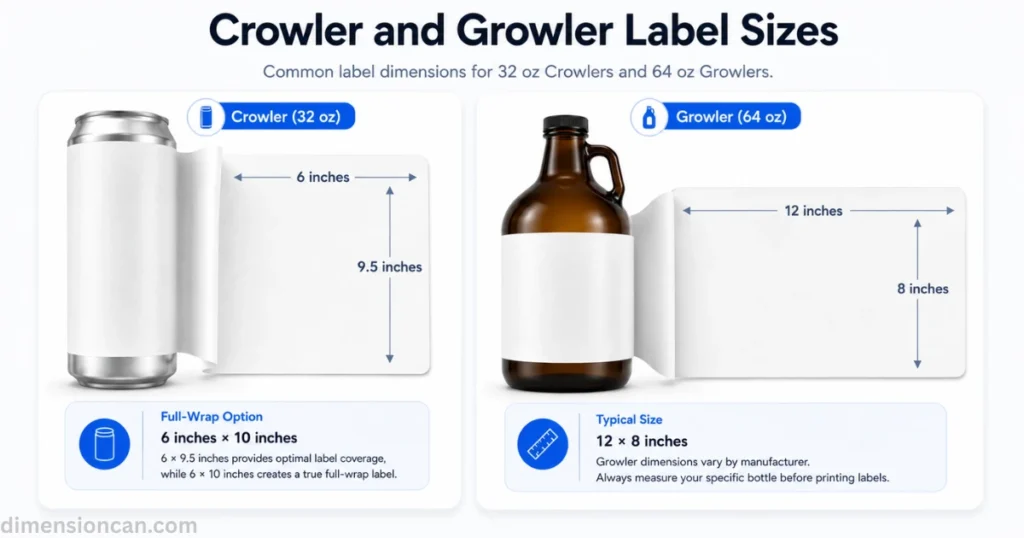
Crowlers, the 32 oz to-go cans popular in taprooms, typically take a 6-inch wide by 9.5-inch tall label for optimal coverage, or 6 inches by 10 inches for a true full wrap.
Growlers, the 64 oz jug-style containers, vary more by manufacturer. Labels usually fall near 12 inches wide by 8 inches tall, though shape differences mean you should always measure your specific bottle first.
International Can Sizes (440mL & 500mL)
European 440mL cans, common across the UK and EU, typically need labels around 8.25 inches wide by 4.75 inches tall. 500mL cans run slightly larger, closer to 8.5 inches wide by 5.25 inches tall.
A label sized for a US 211 can will not transfer cleanly to these metric formats. The seam will either gap or overlap awkwardly.
You do not need fancy software to get this right. The math behind label sizing takes less than two minutes once you know the can diameter.
Label Width Formula (Diameter × Pi)
The formula is simple: Label Width = (Diameter × 3.1416) minus Gap Allowance. For a standard 211 can, that is 2.6875 × 3.1416, which equals 8.443 inches of raw circumference.
Subtract 0.25 to 0.375 inches for a clean overlap, and you arrive at the familiar 8.125-inch industry standard. This same formula works for any can, slim or standard, once you plug in the correct diameter.
A low-tech backup method also works well. Wrap a paper strip around the actual can, mark where it overlaps, then measure that strip flat. This catches fit problems before you spend a cent on printing.
Margins, Bleed, and Safe Zones
Label height should only cover the straight body wall of the can, never the curved dome or base. Leave 0.25 inches of margin on the top and bottom edges to prevent bunching during application.
Safe zones keep logos and required text at least 0.25 inches from any cut edge. Bleed is a separate buffer, usually 0.125 inches, added outside your final cut line so no white edge appears if the die shifts slightly.
FAQ’s About Beer Can Label Dimensions
What are the dimensions of a beer can?
A standard 12 oz beer can measures close to 4.83 inches tall with a 2.6875-inch diameter. A 16 oz tallboy shares that same diameter but stands roughly 6.125 inches tall.
What is a standard label size?
The standard label size for a 12 oz can is 8.125 inches wide by 3.625 inches tall. For a 16 oz can, it is 8.125 inches wide by 5 inches tall. These two sizes fit the vast majority of craft beer cans sold in the US.
Conclusion
Getting your beer can label dimensions right protects your shelf presence and your printing budget. Measure your actual cans, test with a paper template, and confirm your diameter code before any large print run.
Use the interactive Can Dimension Calculator below to calculate can height, diameter, capacity, and volume in seconds.
James Walker is a content researcher and writer specializing in dimensions, measurements, size comparisons, and conversion topics. He creates clear, practical, and easy-to-understand guides that help readers visualize and understand real-world measurements.