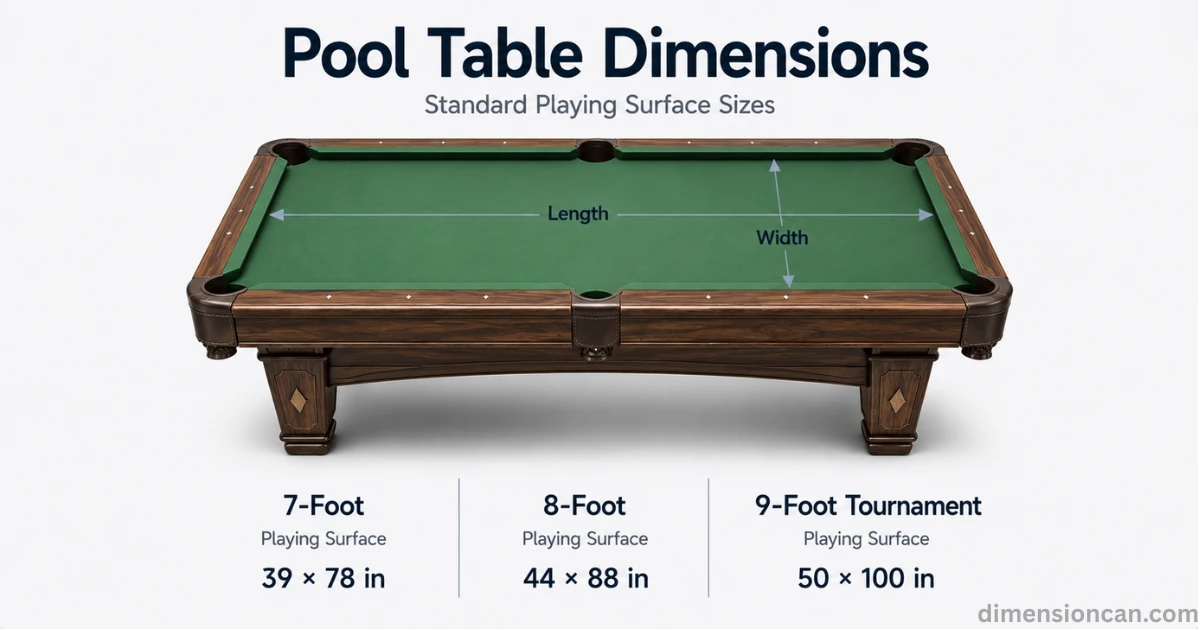
Pool table dimensions vary by size. A standard 7-foot table measures 39 × 78 inches, an 8-foot table measures 44 × 88 inches, and a 9-foot tournament table measures 50 × 100 inches on the playing surface.
This guide breaks down every standard pool table size, explains the difference between the table’s footprint and its actual playing area, and shows you exactly how much room you need before you buy.
Standard Pool Table Dimensions by Size
7-Foot Pool Table Dimensions (Bar & Pub Size)
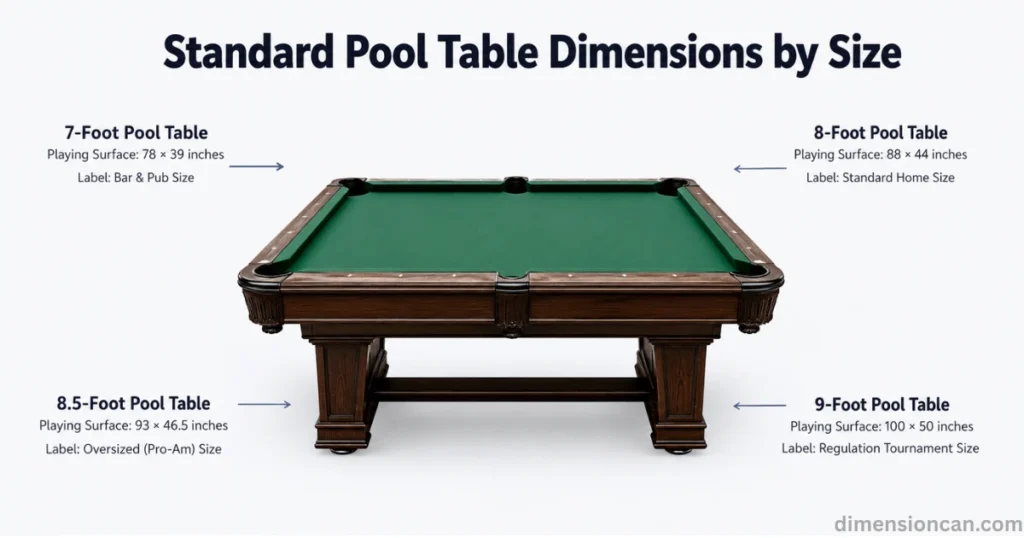
A 7-foot table measures roughly 78 inches by 39 inches of playing surface. This is the size you’ll find in most bars, pubs, and rec rooms across America.
Its compact footprint makes it the go-to choice for smaller spaces, apartments, and family rec rooms where floor space is limited.
8-Foot Pool Table Dimensions (Standard Home Size)
The 8-foot table is the most popular size for residential use. Its playing surface measures about 88 inches by 44 inches.
This size strikes a balance between authentic gameplay and practical space requirements, which is why most home billiards retailers list it as their best-selling option.
8.5-Foot Pool Table Dimensions (Oversized Size)
Sometimes called a “pro-am” table, the 8.5-foot table has a playing surface of roughly 93 inches by 46.5 inches. It sits between home and tournament sizing.
Serious hobbyists and players who want a near-tournament feel without going full regulation size often choose this middle-ground option.
9-Foot Pool Table Dimensions (Regulation Tournament Size)
The 9-foot table is the official regulation size used by the World Pool-Billiard Association (WPA) for professional tournaments. Its playing surface measures 100 inches by 50 inches.
This is the size you’ll see on televised pool matches and in professional billiard halls. It demands the most floor space of any standard table.
More Posts:Tennis Court Dimensions: The Complete Size Guide (2026)
Playing Surface vs. Overall Pool Table Dimensions
Why the Playing Surface Is Smaller Than the Table’s Footprint
The playing surface is the felt-covered area bounded by the inner edge of the cushions, where the balls actually roll. The overall footprint includes the wooden rails, cushions, and trim around the outside.
A table marketed as “8 feet” refers to its approximate outer length, not the exact playing area. This is why two tables labeled the same size can have slightly different playing surfaces depending on the manufacturer.
Slate Size vs. Cushion-to-Cushion Measurement
The slate is the flat stone bed under the felt that gives the table its stability and true roll. Slate size is usually a fraction larger than the cushion-to-cushion measurement, since the rails sit on top of the slate’s outer edges.
Knowing your slate size matters most when you’re moving a table, since slate is heavy and typically shipped in three separate pieces on larger tables.
How Rail Width Changes a Table’s Total Dimensions
Rail width varies between manufacturers, usually falling between 6 and 8 inches. Wider rails add to the table’s total footprint without changing the playing surface size at all.
This is a detail most buyers overlook, but it’s essential when measuring doorways, stairwells, or tight hallways your table needs to pass through during delivery.
Room Size Requirements for Each Pool Table Size
Minimum Room Size Chart by Table Dimension
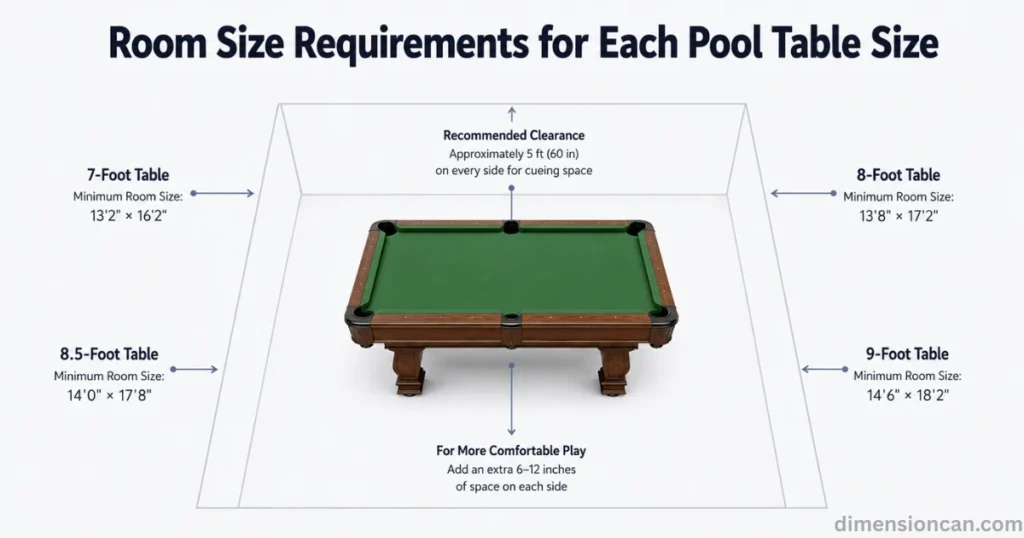
As a baseline, add roughly 5 feet of clearance on all sides of the table for cueing space. Here’s the general minimum room size by table:
- 7-foot table: 13’2″ x 16’2″
- 8-foot table: 13’8″ x 17’2″
- 8.5-foot table: 14′ x 17’8″
- 9-foot table: 14’6″ x 18’2″
Recommended Room Size for Comfortable Play
Minimum clearance lets you cue a shot, but it doesn’t leave room to walk comfortably around the table or set up a drink rail. For a truly comfortable game room, add another 6 to 12 inches on each side beyond the minimum.
How Cue Length Determines Your Room Size Needs
Standard cue sticks measure 58 inches long. Room size charts are built around this length, since a full backswing needs that much open space behind the player.
More Posts:Standard Pillow Dimensions: The Complete Size Guide
Choosing the Right Pool Table Dimensions for Your Space
Best Pool Table Size for Small Rooms and Apartments
For apartments, condos, or smaller rec rooms, the 7-foot table is usually the smartest choice. It delivers real gameplay without demanding a room larger than most city apartments can offer.
Best Pool Table Size for Basements and Dedicated Game Rooms
Basements and purpose-built game rooms can typically handle an 8-foot or 8.5-foot table comfortably. These sizes offer a more authentic playing experience while still fitting standard American basement dimensions.
Combo and Convertible Table Dimensions (Pool/Dining Tables)
Combo tables, which convert between a pool table and a dining table, are a growing trend for multi-purpose rooms. These typically follow standard 7-foot or 8-foot playing surface dimensions, with a removable tabletop insert that sits flush over the felt.
This option works well for households that want a game room feature without dedicating an entire room solely to billiards.
Pool Table Dimensions FAQ
What are the standard pool table dimensions?
Standard sizes are 7-foot, 8-foot, 8.5-foot, and 9-foot tables, measured by their approximate outer length. Playing surfaces follow a 2-to-1 ratio of length to width.
What size pool table do I need for my room?
Measure your room first, then subtract at least 5 feet of clearance on all sides from your available space. Whatever table size fits within that remaining footprint is your answer.
What is the difference between a 7ft, 8ft, and 9ft pool table?
The difference is playing surface size and required room space. A 7-foot table suits small rooms, an 8-foot table suits most homes, and a 9-foot table is regulation size used in professional tournaments.
What is the official playing surface size on a 9-foot table?
The regulation 9-foot table has a playing surface of 100 inches by 50 inches, as set by the World Pool-Billiard Association.
How much space do I need around a pool table for cueing?
Plan for roughly 5 feet of clearance on every side of the table. This allows a full cue backswing without hitting a wall or furniture.
Are all “8-foot” pool tables actually the same size?
Not exactly. The 8-foot label refers to the approximate overall footprint, but exact playing surface dimensions can vary slightly between manufacturers due to differences in rail width and cushion design.

James Walker is a content researcher and writer specializing in dimensions, measurements, size comparisons, and conversion topics. He creates clear, practical, and easy-to-understand guides that help readers visualize and understand real-world measurements.