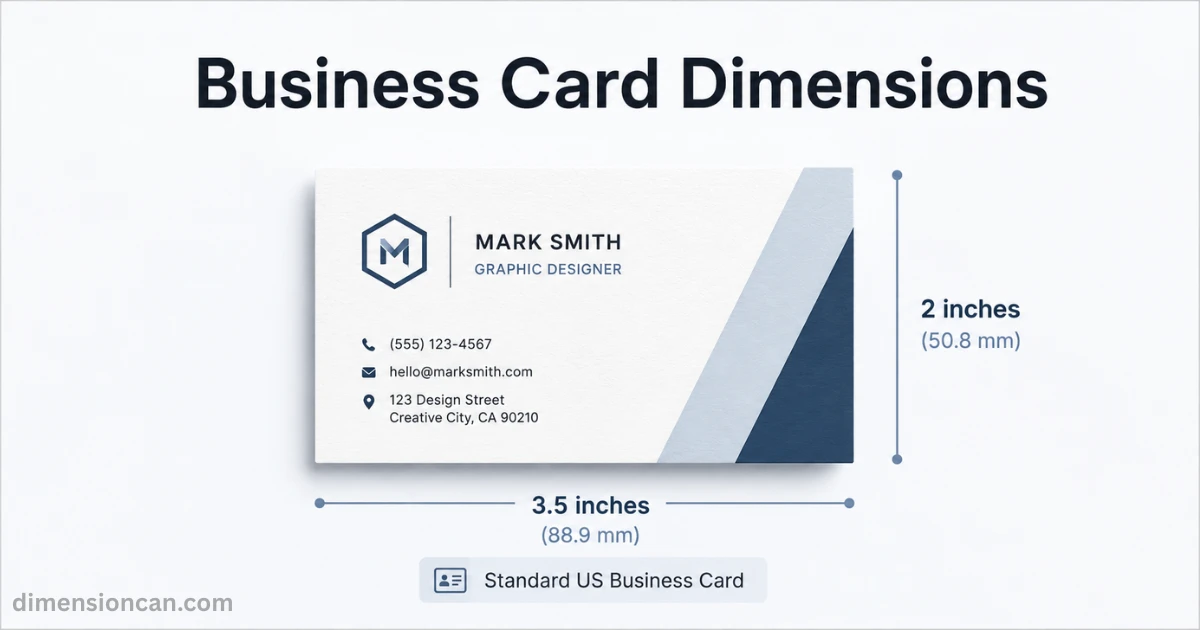
The standard US business card measures 3.5 × 2 inches (88.9 × 50.8 mm). This size fits most wallets and card holders, making it the industry standard for professional business cards.
Picking the right size feels small. But it affects how your card gets used, kept, or tossed. This guide breaks down every measurement you need, plus the mistakes that trip up first-time designers.
Standard Business Card Dimensions
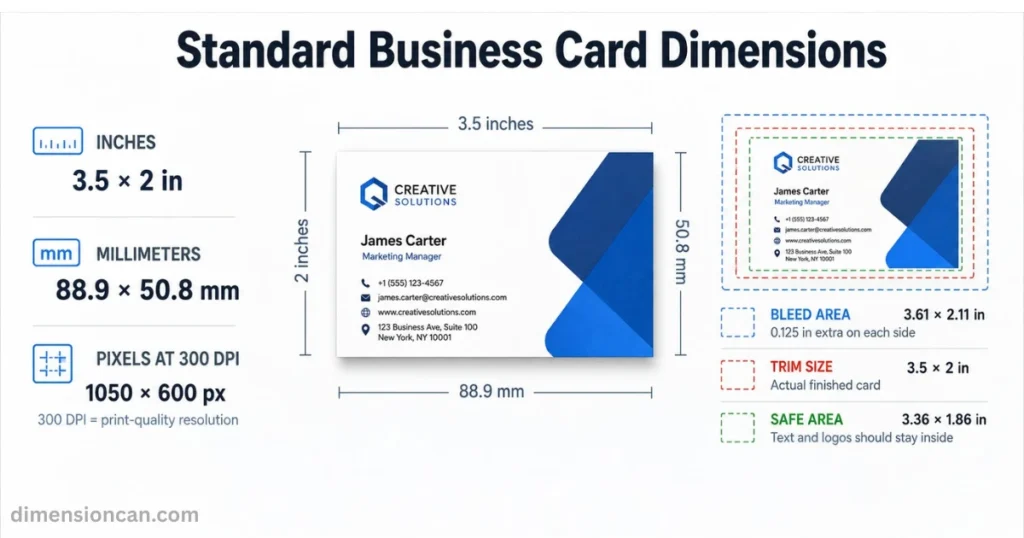
It’s 3.5″ x 2″, or 88.9mm x 50.8mm in metric terms. .
Standard Business Card Dimensions in Inches, MM, and Pixels
Designers need more than one unit of measurement.
- Inches: 3.5″ x 2″
- Millimeters: 88.9mm x 50.8mm
- Pixels at 300 DPI: 1050 x 600 px
The 300 DPI standard matters because it’s the print-quality resolution.
Bleed, Trim, and Safe Area Business Card Dimensions
- Bleed area: 3.61″ x 2.11″ (0.125″ extra on each side)
- Trim size: 3.5″ x 2″ (the actual finished card)
- Safe area: 3.36″ x 1.86″ (where text and logos should stay)
Any background color, photo, or pattern should extend into the bleed zone.
More Posts:Envelope Dimensions: Standard Sizes, Uses & USPS Rules
Business Card Dimensions by Shape and Style
Square Business Card Dimensions
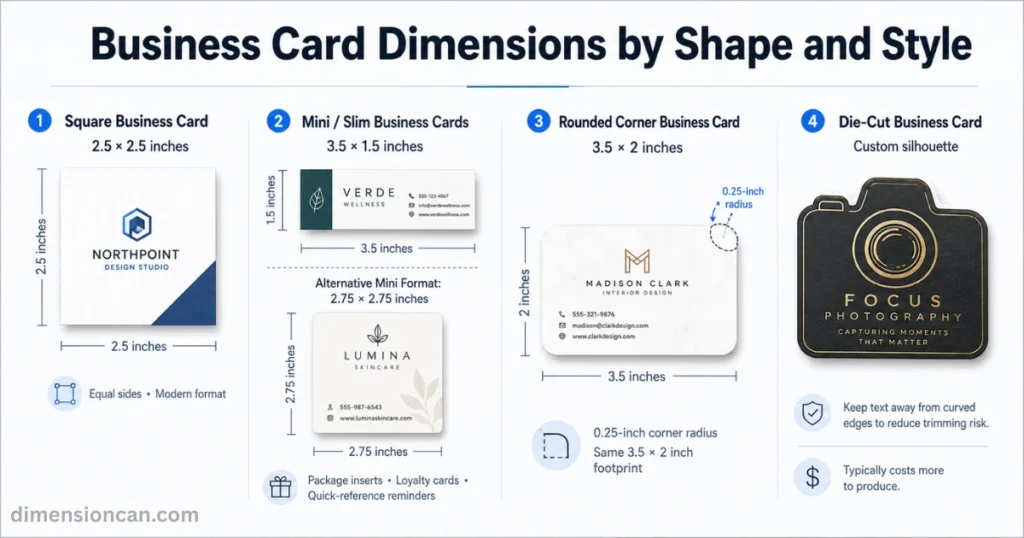
Square business cards measure 2.5″ x 2.5″. They skip the traditional rectangle shape entirely, which gives them a modern, deliberate feel.
Designers, photographers, and creative studios lean toward square formats because the equal sides make room for bold visuals or a centered logo.
Mini and Slim Business Card Dimensions
Mini business cards typically run 3.5″ x 1.5″, keeping the same width as a standard card but cutting the height in half. Some brands use 2.75″ x 2.75″ as an alternative mini format.
These smaller business card dimensions work well as package inserts, loyalty cards, or quick-reference reminders.
Rounded Corner and Die-Cut Business Card Dimensions
Rounded corner cards keep the standard 3.5″ x 2″ footprint but soften the edges with a quarter-inch radius. It’s a small tweak that gives cards a more polished, contemporary look without changing how they fit in a wallet.
Die-cut cards go further, cutting the card into a custom silhouette tied to a logo or product shape. These custom business card dimensions cost more to produce and need extra care in the design file, since text placed too close to a curved edge risks getting trimmed.
Business Card Dimensions Around the World
European and UK Business Card Dimensions
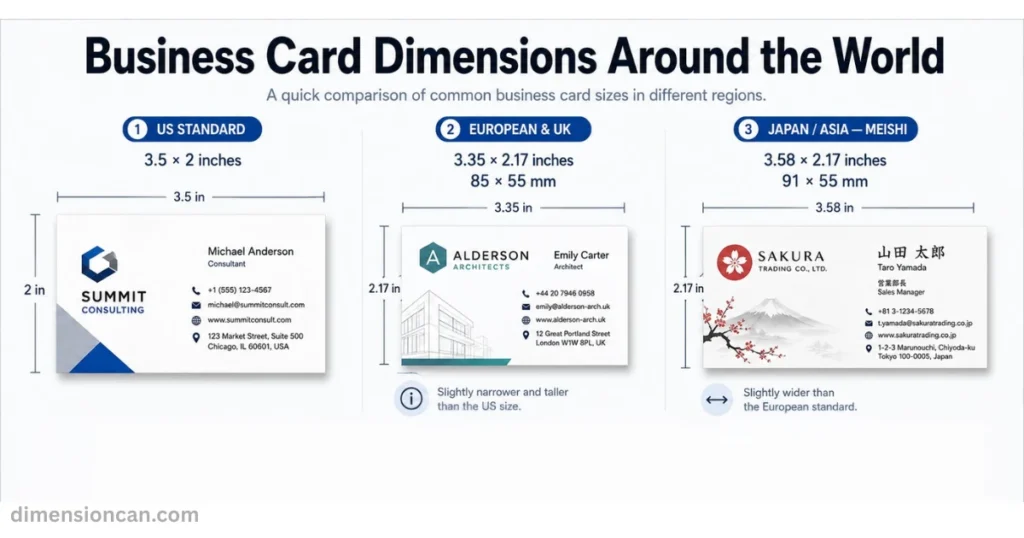
The ISO 216 standard used across Europe and the UK sets business card dimensions at 3.35″ x 2.17″ (85mm x 55mm). It’s slightly narrower and taller than the US size, so a US-printed card can feel oversized next to a European card holder.
Japan and Asia Business Card Dimensions
Japan’s meishi format measures 3.58″ x 2.17″ (91mm x 55mm), a touch wider than the European standard. Card exchange in Japan carries strong etiquette, presenting and receiving with both hands, reading it carefully before putting it away.
More Posts:Pokemon Card Dimensions: Standard, Japanese & Jumbo Sizes
How to Choose the Right Business Card Dimensions
Business Card Dimensions by Industry and Brand Personality
Law firms, financial advisors, and consultants generally stick with standard business card dimensions. The familiar shape signals stability and keeps the focus on credentials rather than novelty.
Creative fields, design studios, photographers, and boutique agencies have more room to experiment. Square or die-cut formats can reinforce a distinctive, visual brand identity, as long as the layout stays clean and uncluttered.
Wallet and Card Holder Fit Standards
Most wallets and card holders are built for cards between 3.4 and 3.6 inches wide and 2 to 2.2 inches tall. Straying outside that range means your card risks getting bent, left in a drawer, or simply not carried at all.
Paper Weight and Thickness by Card Dimensions
Size isn’t the only physical factor. Paper thickness, measured in points (pt), changes how a card feels in hand. 16pt to 18pt is the common professional starting point, with 24pt and up considered premium.
Larger cards, like square formats, often benefit from thicker stock since more surface area can feel flimsy at a lighter weight. Smaller cards can get away with slightly thinner paper without feeling cheap.
FAQ’s About Business Card Dimensions
What is the standard business card size in the US?
The standard business card size in the US is 3.5″ x 2″ (88.9mm x 50.8mm). It’s the most widely used format because it matches wallet and card holder dimensions.
What size should my business card file be with bleed?
Add 0.125 inches of bleed on all sides. For a standard card, that means designing at 3.61″ x 2.11″, or 1083 x 633 pixels at 300 DPI.
What is the safe area on a business card?
The safe area is 3.36″ x 1.86″ for a standard card. Keep all text, logos, and contact details inside this zone to avoid trimming issues.
Can business cards be a different size than standard?
Yes. Square, mini, and die-cut business card dimensions are all common alternatives. They tend to cost more to print and may not fit standard wallets, so they work best for selective, brand-focused use rather than daily networking.
What business card dimensions work best for digital wallets and QR codes?
Standard 3.5″ x 2″ dimensions leave enough room for a scannable QR code alongside basic contact details. Keep the code at least 0.5″ x 0.5″ and placed inside the safe area so it stays fully scannable after trimming.

James Walker is a content researcher and writer specializing in dimensions, measurements, size comparisons, and conversion topics. He creates clear, practical, and easy-to-understand guides that help readers visualize and understand real-world measurements.