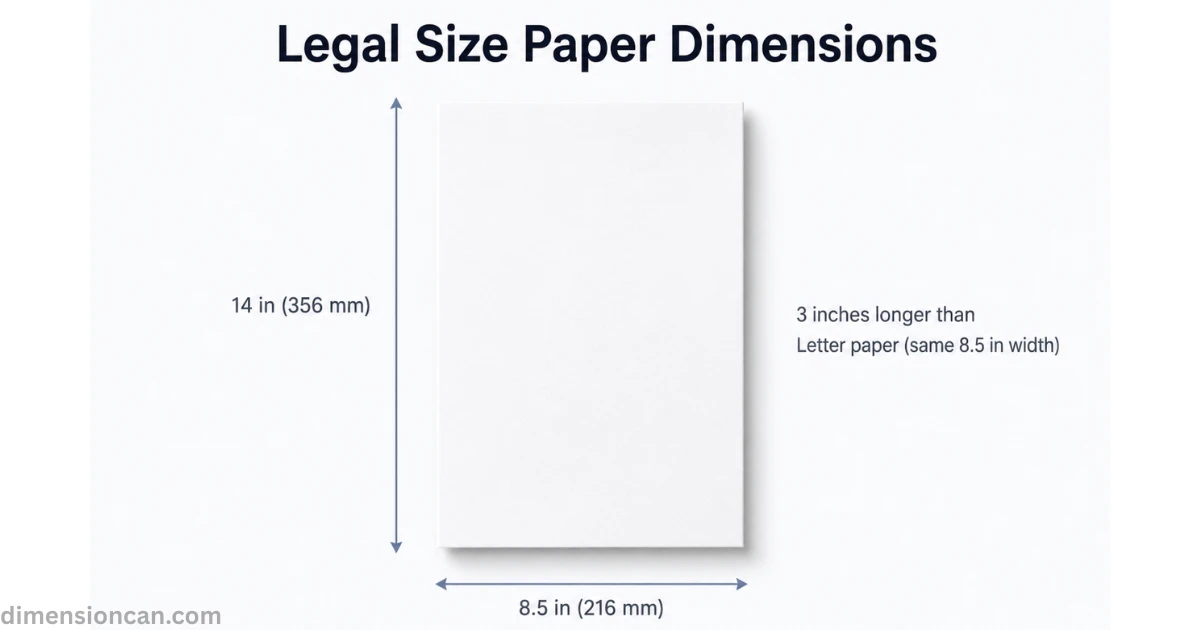
Legal size paper measures 8.5 × 14 inches (216 × 356 mm), making it 3 inches longer than standard Letter paper while keeping the same width. It’s the standard choice for contracts, court filings, and other official US documents that need extra space for text and signatures.
What Are Legal Size Paper Dimensions
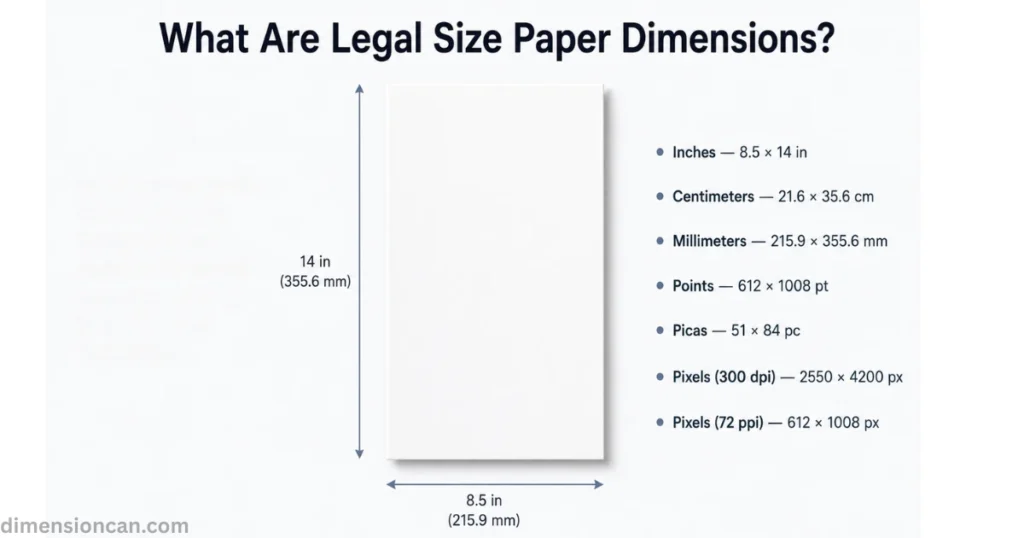
The legal size paper dimensions are fixed at 8.5 x 14 inches. In the US, this is one of the standard sizes in the ANSI paper series, sitting between Letter and Tabloid.
| Unit | Dimensions |
|---|---|
| Inches | 8.5 x 14 in |
| Centimeters | 21.6 x 35.6 cm |
| Millimeters | 215.9 x 355.6 mm |
| Points | 612 x 1008 pt |
| Picas | 51 x 84 pc |
| Pixels (300 dpi) | 2550 x 4200 px |
| Pixels (72 ppi) | 612 x 1008 px |
Legal vs Letter Size Paper Dimensions
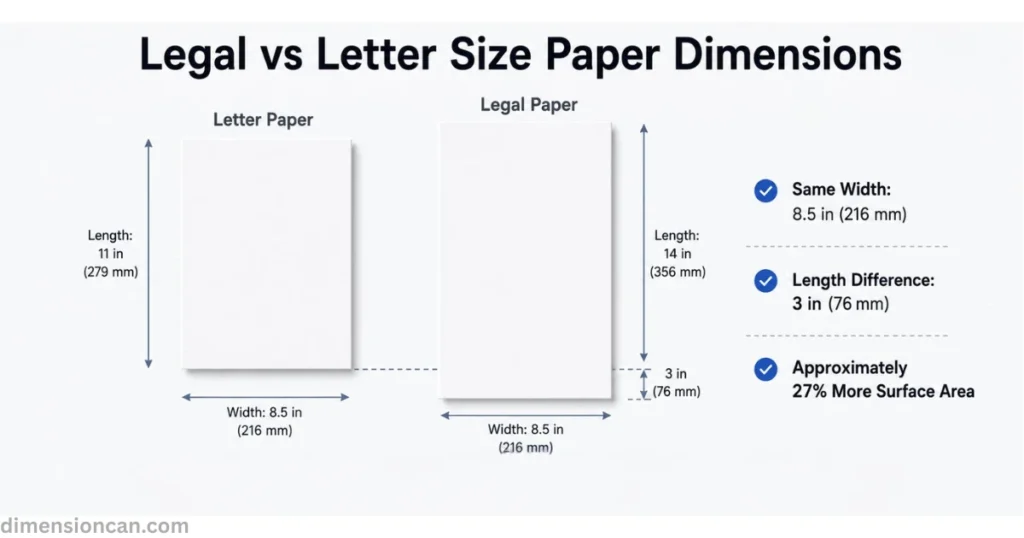
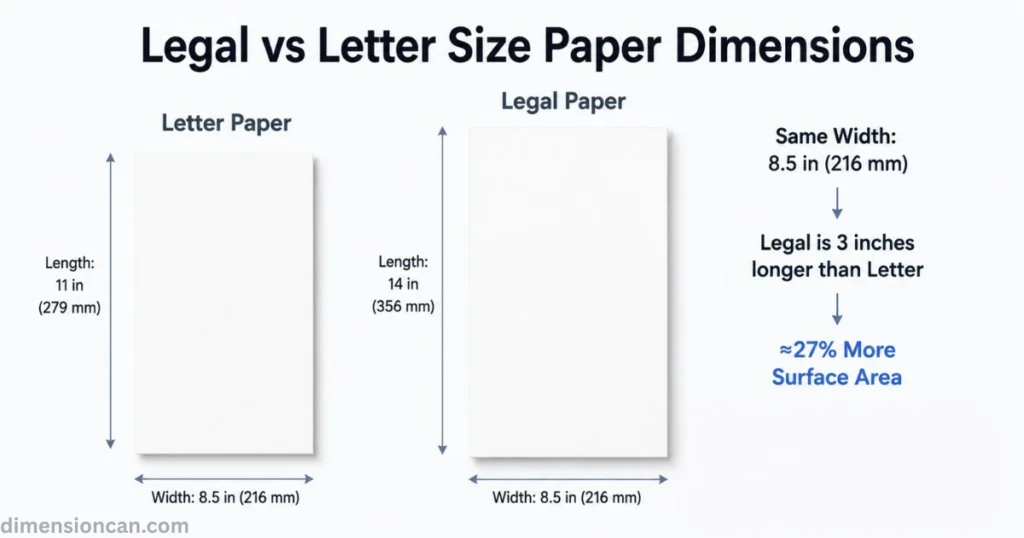
Letter size is 8.5 x 11 inches. Legal size is 8.5 x 14 inches. The width never changes — only the length does. That 3-inch difference gives Legal paper roughly 27% more surface area than Letter.
If you’ve ever printed a rental agreement only to see the bottom clause sliced off, that’s almost always a Letter-vs-Legal paper tray mismatch.
More Posts:Business Card Size – Inches, MM, Pixels & Bleed
Legal Paper vs A3 Paper Dimensions
A3 paper dimensions are 11.7 x 16.5 inches (297 x 420 mm). That makes A3 noticeably bigger than Legal in both directions. A3 belongs to the ISO A-series, the metric system used across Europe, Asia, and most of the world outside North America.
Legal belongs to the US paper series, which only exists in the United States, Canada, and a handful of other countries.
Is A3 the Same as Legal Size
No. A3 is roughly twice the size of A4 and is typically used for posters, architectural sketches, and presentation boards — not legal documents. Legal size, by contrast, was purpose-built for official, text-heavy paperwork.
If someone searches for “A3 legal paper,” they’re usually looking for one of two very different things: a US contract-ready format, or a large-format sheet for design work. Knowing the distinction saves a wasted print job.
When and How to Use Legal Size Paper
- Contracts and agreements
- Court filings and affidavits
- Real estate and mortgage documents
- Government forms
- Financial and accounting spreadsheets that need extra columns
More Posts:Envelope Dimensions: Standard Sizes, Uses & USPS Rules
FAQs About Legal Size Paper Dimensions
Is 11×17 paper Legal size?
No. 11 x 17 inches is called Tabloid or Ledger, depending on orientation. Legal size is 8.5 x 14 inches — noticeably narrower and shorter than 11×17.
Are Legal and A4 the same?
No. A4 measures 8.3 x 11.7 inches, while Legal measures 8.5 x 14 inches. Legal is longer and slightly wider, and the two aren’t interchangeable in printers without adjusting tray settings.
What is the Legal size of 8.5×11?
8.5 x 11 inches is actually Letter size, not Legal. Legal size is 8.5 x 14 inches — three inches longer than Letter, with the same width.
Why is it called Legal-size paper?
It’s called Legal size because it was historically adopted for official legal documents — contracts, court papers, and agreements — that needed more room than standard Letter paper offered.
What is Legal size in pixels at 300 dpi?
At 300 dpi, Legal size paper measures 2550 x 4200 pixels. At 72 ppi (screen resolution), it’s 612 x 1008 pixels.
Is Legal the same as A3?
No. A3 is 11.7 x 16.5 inches, making it larger than Legal’s 8.5 x 14 inches. A3 belongs to the international ISO system, while Legal is a US-only standard with no direct metric equivalent.
Conclusion
Legal size paper dimensions — 8.5 x 14 inches, or 216 x 356 mm — have stayed consistent for a reason: they give official documents the extra room dense legal language needs. Whether you’re comparing it to Letter, A3, or figuring out the right pixel count for a digital template, the format itself hasn’t changed in decades, even as the way we produce and share documents has.
Get the paper size right at the printer settings stage, and you’ll avoid the most common headache people run into: a signature or clause clipped off the bottom of the page.

James Walker is a content researcher and writer specializing in dimensions, measurements, size comparisons, and conversion topics. He creates clear, practical, and easy-to-understand guides that help readers visualize and understand real-world measurements.