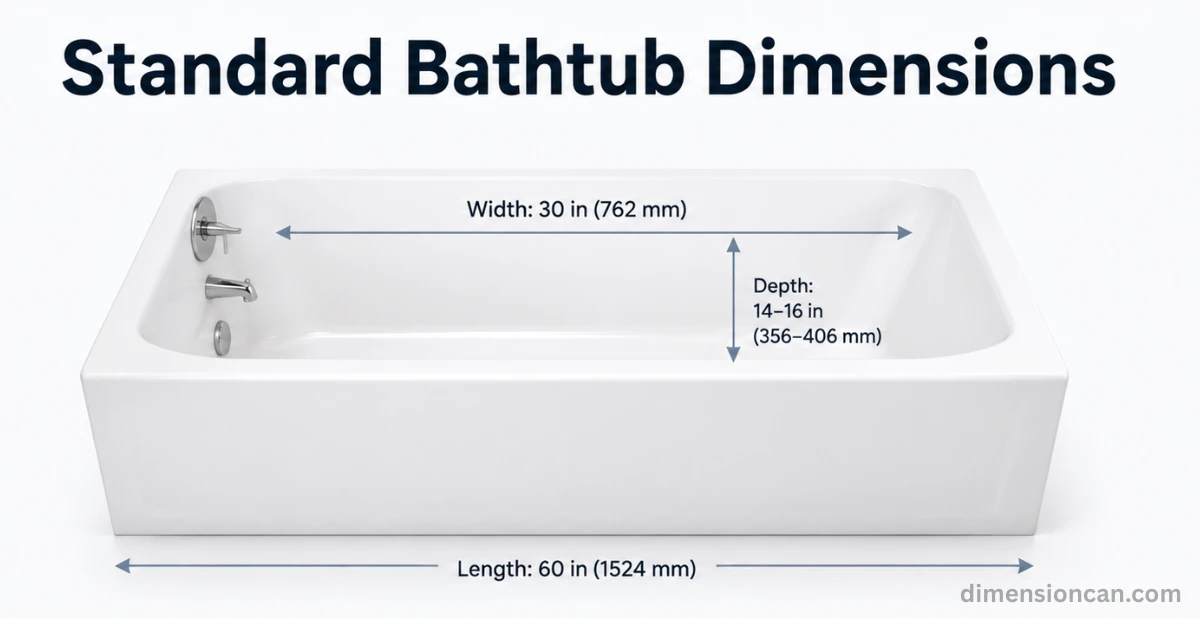
The standard bathtub size in the US is 60 inches long, 30 inches wide, and 14 to 16 inches deep. This is the most common size fitted in American homes, and it’s built to match the standard alcove opening found in most bathrooms.
This guide breaks down every bathtub dimension you’ll actually need, from small-space tubs to freestanding soakers, plus a few details most guides skip entirely, like floor weight limits and ADA clearance rules.
What Is the Standard Bathtub Size?
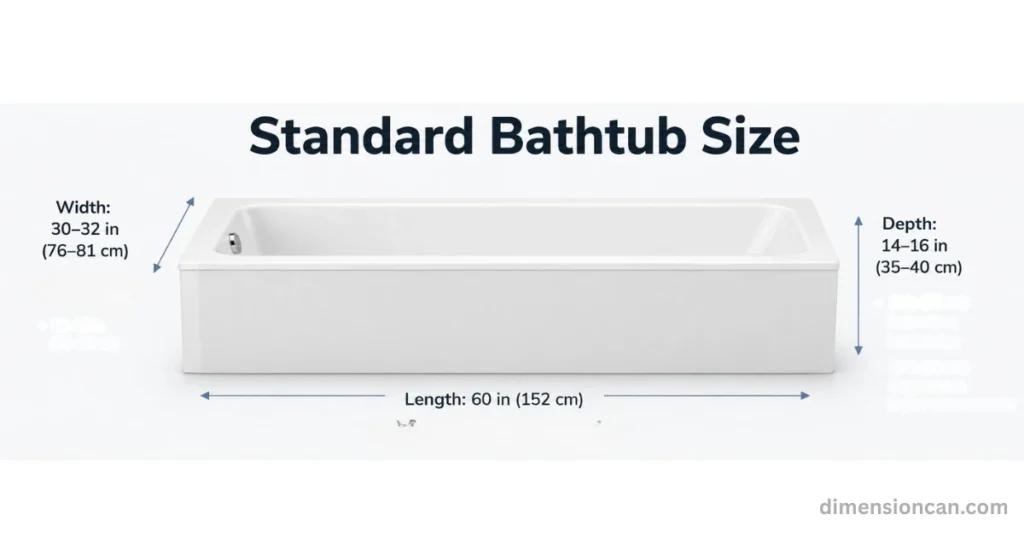
A standard bathtub measures 60 inches (152 cm) long, 30 to 32 inches (76-81 cm) wide, and 14 to 16 inches (35-40 cm) deep. This size fits neatly into a standard 5-foot alcove, which is why it’s the default choice in most new-build homes and remodels across the US.
Standard Bathtub Length, Width, and Depth
Length is the most fixed number in the industry. Nearly every alcove tub sold in the US runs 60 inches, since that matches standard framing between two walls.
Width has a bit more range, usually 30 to 32 inches, giving enough room to sit or lie back comfortably.
Depth varies the most, and it’s the number that decides how deep your soak actually feels. A shallow tub at 14 inches holds less water and heats faster. A deeper tub at 16 inches or more gives a fuller soak but needs a bigger water heater to fill it properly.
Standard Bathtub Size vs. Standard Bathroom Size
A standard US bathroom averages around 40 square feet, which comfortably fits a 60-inch alcove tub with room to spare for a vanity and toilet.
Smaller bathrooms, under 30 square feet, usually need a compact tub under 55 inches to avoid crowding the space.
More Posts:Soup Can Dimensions: Size, Height & Capacity Guide (2026)
Bathtub Dimensions by Type
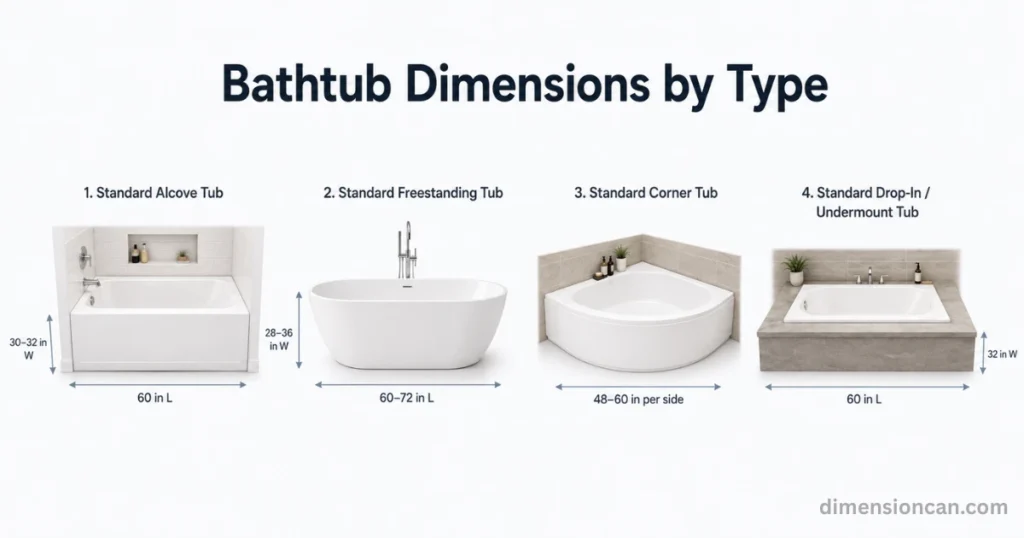
Standard Alcove Bathtub Dimensions
The alcove tub is the most common style in American homes, fitted between three walls. It typically runs 60 inches long by 30-32 inches wide, with one finished side and two unfinished sides that tuck against the wall.
Standard Freestanding Bathtub Dimensions
Freestanding tubs stand alone in the room, not tucked against any wall, so they run larger. Expect lengths between 60 and 72 inches and widths from 28 to 36 inches.
Standard Corner Bathtub Dimensions
Corner tubs are shaped to fit into a room’s corner, often with a triangular or curved front. Sizes range from 48 to 60 inches per side, and they’re a solid pick for awkward or oddly shaped bathrooms where a straight alcove tub wouldn’t fit cleanly.
Standard Drop-In and Undermount Bathtub Dimensions
Drop-in tubs sit inside a custom-built frame or platform, so their outer dimensions vary more than any other type.
The tub itself often measures 60 by 32 inches, but the surrounding deck can add several more feet depending on design. Undermount tubs follow the same idea, mounted below a finished deck edge for a seamless look.
Bathtub Dimensions by Bathroom Size
Best Bathtub Sizes for Small Bathrooms
For bathrooms under 30 square feet, a compact alcove tub around 48 to 55 inches works best. These shorter tubs still offer a full soak but leave enough clearance to open doors and move around without bumping into fixtures.
Best Bathtub Sizes for Large or Master Bathrooms
Larger bathrooms, typically 50 square feet or more, can handle a freestanding or soaking tub up to 72 inches. These spaces allow clearance on all sides, which freestanding tubs need to look and function properly.
Compact and Small-Space Bathtub Options
Beyond shorter alcove tubs, corner tubs and Japanese soaking tubs (deep, short-footprint tubs around 40-48 inches long) are strong choices for tight spaces. Soaking tubs trade length for depth, so the bather sits upright rather than lying flat, which uses far less floor space.
Bathtub Dimensions
Bathtub Weight and Floor Load Capacity
An empty standard tub weighs between 75 and 500 pounds depending on material, cast iron being the heaviest and acrylic the lightest.
Once filled with water and a bather, that same tub can weigh over 1,000 pounds. Older homes and upper-floor bathrooms need their floor joists checked before installing a heavy cast iron or stone tub.
Bathtub Size for Two-Person and Soaking Tubs
Two-person tubs need considerably more width, usually starting at 60 inches wide and stretching to 72 inches long, to fit two adults without crowding.
Soaking tubs prioritize depth over length, often reaching 22 to 27 inches deep, letting water cover the shoulders while seated.
More Posts:Ammo Can Dimensions: Size ,Height & Storage CAPACITY (2026)
How to Choose the Right Bathtub Size
Measuring Your Bathroom Space Before You Buy
Measure the full alcove width, depth, and ceiling height, plus the door swing path. Leave at least 21 inches of clear floor space in front of the tub, which is the standard minimum most building codes require.
Plumbing, Drain, and Faucet Placement
Drain location isn’t universal. Tubs come in left-hand or right-hand drain configurations, so check your existing plumbing before ordering a replacement, or you’ll need to move pipework entirely.
Clearance Space and Door Swing Requirements
Beyond the tub itself, factor in space for the door to swing open fully and for a person to towel off without hitting the sink or toilet. Cramped clearance is one of the most common reasons homeowners regret a tub upgrade after installation.
FAQ’s About Standard Bathtub Dimensions
What is the standard bathtub size in the US?
The standard size is 60 inches long, 30 inches wide, and 14 to 16 inches deep.
What is the smallest standard bathtub size?
Compact alcove tubs start around 48 to 55 inches long for tight bathrooms.
How deep is a standard bathtub?
Most standard tubs are 14 to 16 inches deep, while soaking tubs go up to 27 inches.
What size bathtub fits a small bathroom?
A 48 to 55-inch compact tub or a corner tub works best for small bathrooms.
How much clearance space does a bathtub need?
Building codes typically require at least 21 inches of clear floor space in front of the tub.
How much does a filled bathtub weigh?
A filled standard tub with a bather can weigh over 1,000 pounds total.

James Walker is a content researcher and writer specializing in dimensions, measurements, size comparisons, and conversion topics. He creates clear, practical, and easy-to-understand guides that help readers visualize and understand real-world measurements.