Soup Can Dimensions: Size, Height & Capacity Guide (2026)
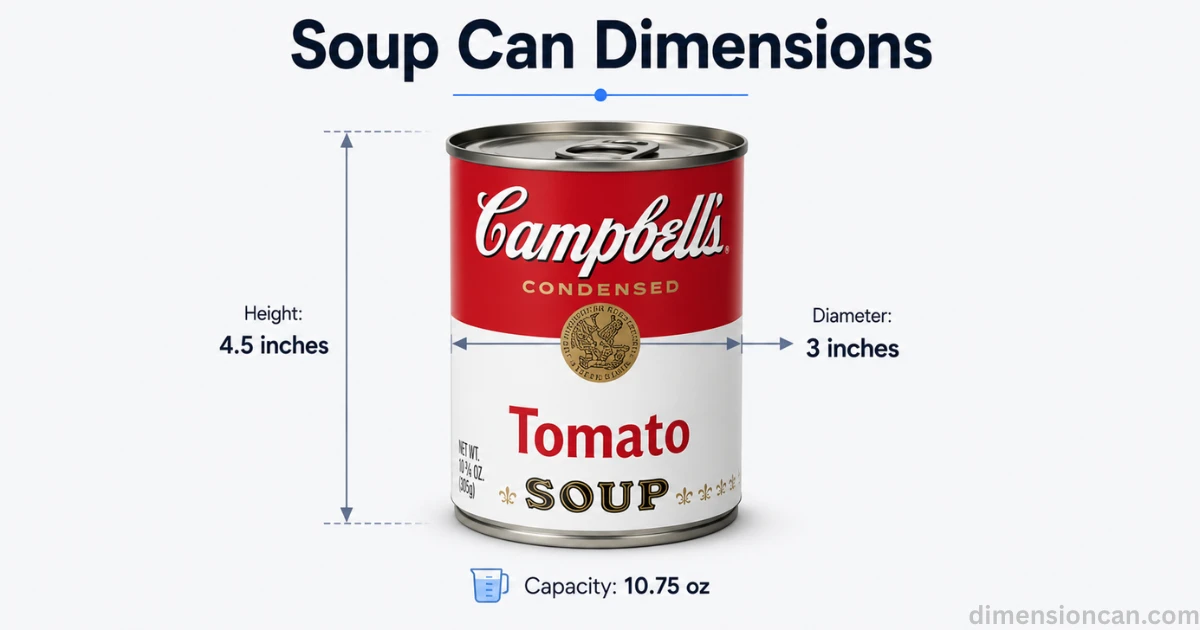
A standard condensed soup can measures 3 inches in diameter and 4.5 inches tall, holding 10.75 ounces of soup. The most common industry size is the #300 can (300×407), while larger ready-to-serve versions measure 3.5 inches wide by 4.5 inches tall and hold 18–19 ounces.
This complete guide covers every standard soup can size, real brand measurements, label dimensions, metric conversions, and industry codes the Can Manufacturers Institute uses to classify every can on American shelves.
What Are Soup Can Dimensions?
all-soup-can-dimensions
Soup can dimensions refer to three physical measurements — diameter (width across the circular base), height (from bottom rim to top), and capacity (volume in fluid ounces).
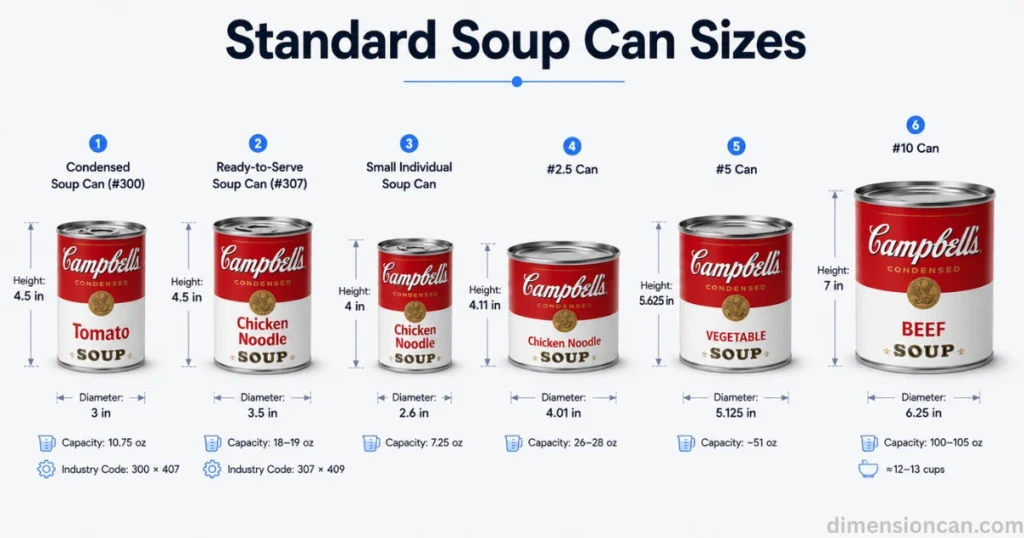
Standard Soup Can Sizes
Can Type
Diameter
Height
Capacity
Condensed (#300)
3 in
4.5 in
10.75 oz
Ready-to-Serve (#307)
3.5 in
4.5 in
18–19 oz
Small Individual
2.6 in
4 in
7.25 oz
#2.5 Can
4.01 in
4.11 in
26–28 oz
#5 Can
5.125 in
5.625 in
~51 oz
#10 Can
6.25 in
7 in
100–105 oz
Condensed Soup Can Dimensions (10.75 oz) — #300 Can
The condensed soup can is the most common size in American kitchens. It measures 3 inches in diameter and 4.5 inches in height, coded as 300×407 in the industry system.
This can holds 10.5 to 10.75 fluid ounces of concentrated product. You add water or milk before serving, which roughly doubles the volume to about 2.5 cups.
The beaded sidewalls on these cans add structural strength during high-heat processing. Shelf life runs 2 to 5 years when stored in a cool, dry place.
Ready-to-Serve Soup Can Dimensions (18–19 oz) — #307 Can
Ready-to-serve soup cans are slightly wider than condensed cans. They measure 3.5 inches in diameter and 4.5 inches tall, coded as 307×409.
These cans hold 18 to 19 fluid ounces of fully prepared soup — no dilution needed. The extra width accommodates chunky vegetables, meat pieces, and hearty ingredients that condensed cans cannot fit comfortably.
One can provides approximately 2 to 2.25 servings based on the USDA’s standard of 8 fluid ounces per serving.
Small Individual Soup Can Dimensions (7.25 oz)
Single-serve soup cans measure about 2.6 inches in diameter and 4 inches tall. They hold around 7.25 ounces — just enough for one light meal or a lunch portion.
These compact cans fit easily in lunch boxes, desk drawers, and office kitchens. Many popular flavors from major brands are available in this convenient portion-controlled format.
Large Format Soup Can Dimensions (#2.5, #5 and #10 Cans)
#2.5 cans measure 4.01 inches in diameter by 4.11 inches tall and hold 26 to 28 ounces — ideal for family-sized portions.
#5 cans expand to 5.125 inches wide and 5.625 inches high, holding approximately 51 ounces for bulk meal preparation.
#10 cans are the largest standard size at 6.25 inches in diameter and 7 inches tall, containing 100 to 105 ounces — roughly 12 to 13 cups of soup. School cafeterias, catering companies, and restaurants rely on this size daily. One #10 can replaces approximately nine standard condensed cans.
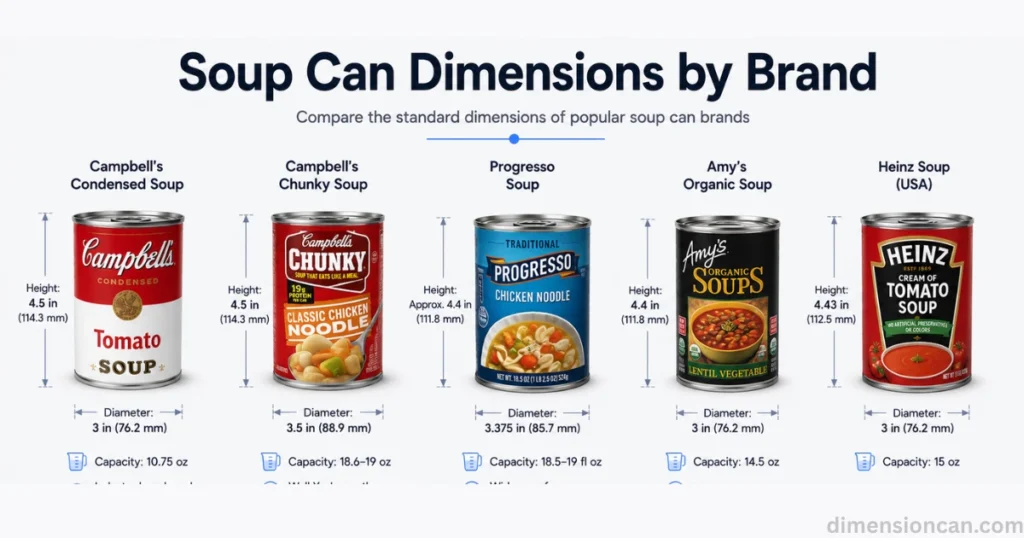
Campbell’s Condensed soups use the classic 3-inch diameter by 4.5-inch height format, holding exactly 10.75 ounces. This iconic red-and-white can has maintained identical soup can dimensions since the 1960s — making it the benchmark every other brand follows.
Campbell’s Chunky varieties measure 3.5 inches wide by 4.5 inches tall, holding 18.6 to 19 ounces. The Well Yes! line follows the same ready-to-serve specifications.
How much does a filled Campbell’s can weigh? A 10.75 oz condensed can weighs approximately 12 to 13 ounces total, including the steel packaging.
Progresso Soup Can Dimensions
Progresso cans measure 3.375 inches in diameter and approximately 4.4 inches in height, holding 18.5 to 19 fluid ounces.
This slightly wider format fits larger vegetable chunks and meat pieces — reflecting Progresso’s premium, ingredient-rich positioning. All Progresso varieties — light, reduced sodium, and traditional — share identical external can measurements regardless of caloric content.
Amy’s, Heinz and Generic Store Brand Dimensions
Amy’s Organic soups use BPA-free cans measuring 3 inches in diameter and 4.4 inches tall, holding 14.5 ounces. Their commitment to clean packaging slightly raises production costs but maintains standard external can dimensions.
Heinz USA versions typically offer 15-ounce cans at 3 inches wide and 4.43 inches high.
Generic store brands from retailers like Walmart, Kroger, and Target precisely match Campbell’s dimensions for direct shelf comparison — giving consumers an accurate size-to-size product comparison.
Soup Can Label Dimensions and Industry Can Size Codes
What Are the Dimensions of a Soup Can Label?
Soup can label dimensions depend on the can’s diameter and height. The label wraps around the cylindrical body of the can.
For a standard condensed can (3-inch diameter, 4.5-inch height):
Label width = circumference of the can = π × diameter = 3.14 × 3 = 9.42 inches
Label height = typically 3.5 to 4 inches (leaving space for top and bottom seams)
For a ready-to-serve can (3.5-inch diameter):
Label width = 3.14 × 3.5 = approximately 11 inches
Label height = typically 3.75 to 4.25 inches
These measurements are critical for graphic designers, food brand packaging teams, and print-on-demand label services. Even a 0.1-inch miscalculation causes label misalignment on high-speed production lines.
How to Read Can Size Codes (#300, #303, #307)
Can size codes use a three-digit number system. The first digit represents whole inches. The last two digits represent sixteenths of an inch.
#300 = 3 and 0/16 inches = exactly 3 inches in diameter
#303 = 3 and 3/16 inches = 3.1875 inches wide
#307 = 3 and 7/16 inches = 3.4375 inches across
This precise system ensures can ends, filling nozzles, and labels align correctly on automated production lines running hundreds of cans per minute.
Diameter and Height in Sixteenths of an Inch Explained
A complete can size designation includes both diameter and height codes separated by a multiplication sign.
Even a 0.01-inch variance can cause sealing failures or label misalignment on industrial production lines. This level of precision is why the system has remained unchanged since the 1940s.
This math confirms exactly why the standard condensed can holds 10.75 oz — the geometry is precise, not arbitrary.
FAQ’s — Soup Can Dimensions
What Is the Size of a Soup Can?
A standard soup can in the USA measures 3 inches in diameter and 4.5 inches in height, holding 10.75 ounces. Ready-to-serve varieties are 3.5 inches wide and 4.5 inches tall, holding 18 to 19 ounces.
What Is the Standard Size of a Can?
The most common standard can size in the USA is the #300 can — 3 inches in diameter by 4.5 inches tall — holding 10.75 ounces. For ready-to-serve soups, the #307 can at 3.5 × 4.5 inches is the standard.
What Is the Diameter of a Can of Soup?
The diameter of a condensed soup can is 3 inches (7.62 cm). A ready-to-serve soup can has a diameter of 3.5 inches (8.89 cm). Small individual cans measure approximately 2.6 inches across.
What Are the Dimensions of a Soup Can Label?
A soup can label for a standard condensed can measures approximately 9.42 inches wide (the full circumference) and 3.5 to 4 inches tall. For ready-to-serve cans, label width is approximately 11 inches wide and 3.75 to 4.25 inches tall.
Conclusion
Soup can dimensions are more than simple measurements. They impact how food is stored, portioned, priced, labeled, and consumed across millions of American households every day.
A standard condensed can measures 3 × 4.5 inches and holds 10.75 oz. A ready-to-serve can runs 3.5 × 4.5 inches at 18 to 19 oz. Label widths follow the can’s circumference — 9.42 inches for condensed and 11 inches for chunky varieties.
Whether you’re organizing your pantry, designing a food label, scaling a recipe, or comparing brands — knowing the exact soup can size gives you a real, practical edge in the kitchen and beyond.
Use the interactive Can Dimension Calculator below to calculate can height, diameter, capacity, and volume in seconds.
James Walker is a content researcher and writer specializing in dimensions, measurements, size comparisons, and conversion topics. He creates clear, practical, and easy-to-understand guides that help readers visualize and understand real-world measurements.