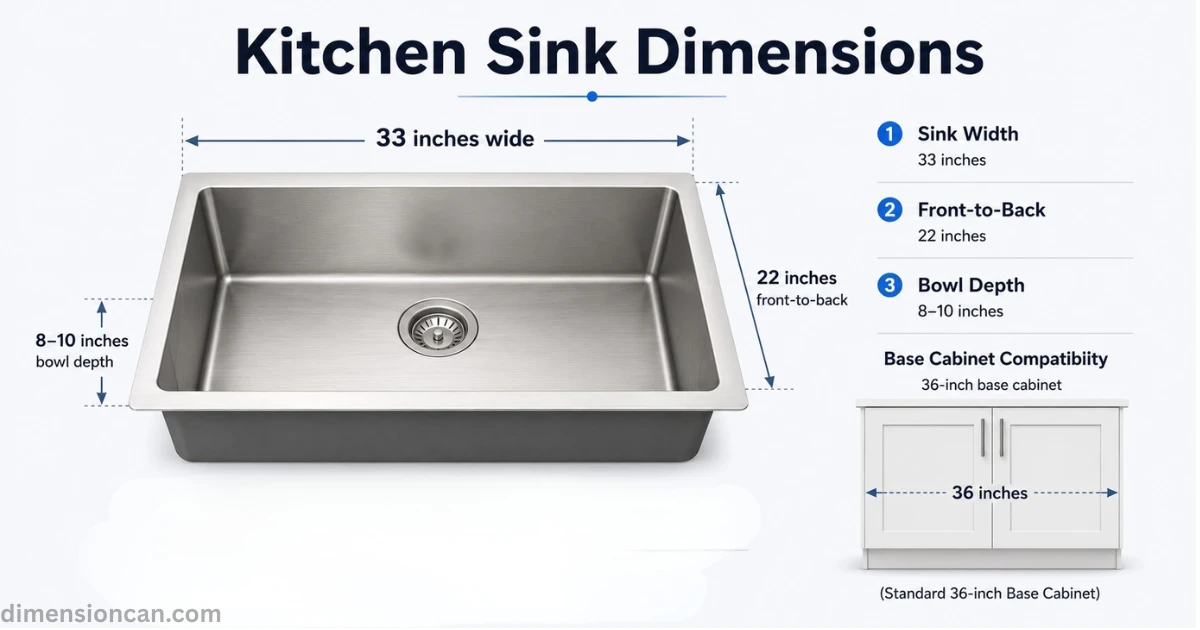
The standard kitchen sink measures 33 inches wide × 22 inches front-to-back, with an 8–10 inch bowl depth. This size is designed to fit a standard 36-inch base cabinet and is the most common choice for residential kitchens.
This guide breaks down every kitchen sink measurement you need, in plain language, so you get it right the first time.
Kitchen Sink Dimensions by Type and Mounting Style
Single Bowl Sink Dimensions
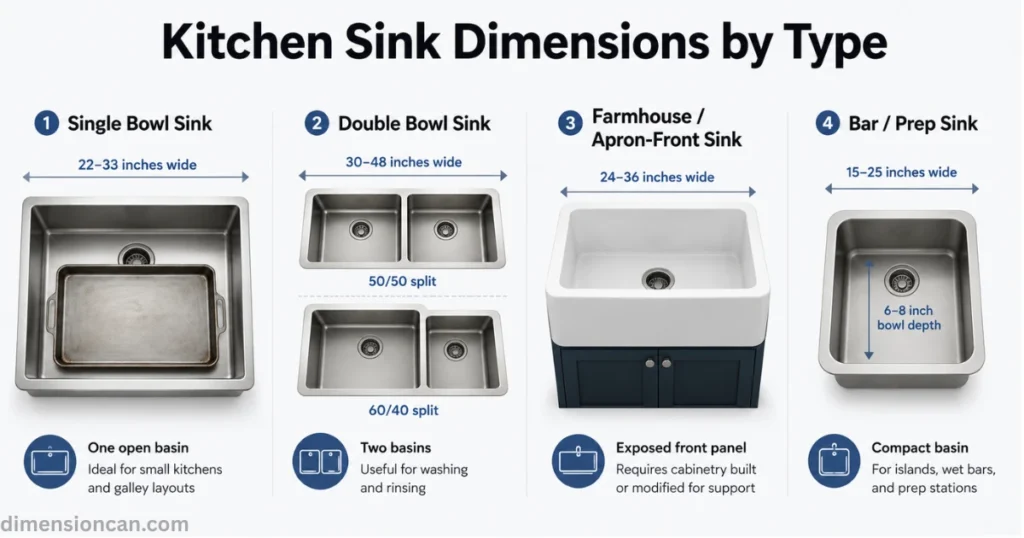
Single bowl kitchen sinks run 22 to 33 inches wide. They’re the go-to pick for small kitchens, galley layouts, and anyone who wants one open basin instead of a divided one.
A single large bowl is easier to fit an oversized roasting pan or baking sheet into, something a divided sink struggles with.
Double Bowl Sink Dimensions
Double bowl sink dimensions typically range from 30 to 48 inches wide, split into two basins. This layout suits households that hand-wash dishes often, since one side can hold soapy water while the other rinses.
Splits come in even 50/50 configurations or offset 60/40 designs, where one bowl is noticeably bigger than the other.
Farmhouse/Apron-Front Sink Dimensions
Farmhouse sinks, also called apron-front sinks, run 24 to 36 inches wide with an exposed front panel that replaces part of the cabinet face. Because the front panel is visible, these sinks need cabinets built or modified specifically to support the extra weight and exposed apron.
Bar and Prep Sink Dimensions
Bar sink dimensions and prep sink dimensions run smaller, typically 15 to 25 inches wide with a shallower 6 to 8 inch bowl depth. These secondary sinks work well in kitchen islands, wet bars, or as a dedicated prep station away from the main sink, so two people can work in the kitchen without bumping elbows.
More Posts:Refrigerator Dimensions: A Complete Guide to Finding the Right Fit
How to Measure Your Kitchen Sink and Cabinet
- Measure the length from the far left edge to the far right edge of the sink.
- Measure the width from the front edge to the back edge.
- Measure the bowl depth from the bottom of the basin straight up to the rim.
- Write down each number as you go. It’s easy to mix them up later.
Step-by-Step: Measuring Your Cabinet for a New Sink
- Measure the inside width of the cabinet opening, left to right.
- Measure the depth of the cabinet, front to back.
- Check for obstructions like pipes, a garbage disposal, or support braces that could limit sink depth.
- Subtract roughly 3 inches from the cabinet width to find your maximum sink width.
Matching Sink Size to Cabinet Width
The “Cabinet Minus 3 Inches” Rule Explained
A simple rule used across the cabinetry trade: your sink width should be about 3 inches smaller than your cabinet width. That extra space accounts for mounting clips, the cabinet frame, and structural support along the edges. Skip this margin and you risk a sink that overhangs the cabinet or interferes with the doors.
Cabinet-to-Sink Size Table
| Cabinet Width | Maximum Sink Width |
|---|---|
| 24 inches | 21 inches |
| 30 inches | 27 inches |
| 33 inches | 30 inches |
| 36 inches | 33 inches |
| 42 inches | 39 inches |
Face-Frame vs. Frameless Cabinets
Face-frame cabinets have a wood frame across the front opening, which reduces the usable interior space by an inch or two on each side. Frameless cabinets, common in European-style kitchens, have no frame, so the full cabinet width is usable.
Choosing the Right Sink Dimensions for Your Kitchen
Small Kitchens, Apartments, and Corner Sink Sizing
In small kitchens and apartments, a compact 22 to 24 inch single bowl sink frees up valuable counter space for prep work. Corner sinks are another option worth considering in tight layouts, since they tuck into an otherwise unused corner and open up straight counter runs on either side.
Sink Depth and Ergonomics
Sink depth affects more than capacity, it affects your back. A bowl that’s too deep forces shorter users to lean and reach, which strains the lower back over repeated use. A bowl that’s too shallow splashes water everywhere. Most kitchen designers recommend an 8 to 10 inch bowl depth as the comfortable middle ground for the average adult.
Household Size and Cooking Habits
A single-person household or a couple can usually get by with a smaller single bowl sink. A larger family that cooks often, or someone who entertains regularly, benefits from a double bowl or an extra-wide single bowl that fits full-size sheet pans and stockpots without turning them sideways.
More Posts:Bathroom Vanity Dimensions: Standard Sizes, Small-Bath Sizes & Metric (cm) Chart
FAQs About Kitchen Sink Dimensions
What is the standard size of a kitchen sink?
The standard kitchen sink size is 33 inches wide by 22 inches deep, with a bowl depth between 8 and 10 inches. This size fits a standard 36-inch base cabinet.
How do I know what size sink will fit my cabinet?
Measure the inside width of your cabinet opening, then subtract about 3 inches. That number is your maximum sink width.
What’s the difference between undermount and drop-in sink dimensions?
Undermount sinks are measured and cut based on the sink’s inner dimension, since it mounts below the counter. Drop-in sinks use a smaller cutout than the sink’s outer dimension, since the rim rests on top of the counter.
How deep should a kitchen sink be?
Most kitchen sinks have a bowl depth of 8 to 10 inches. This range balances capacity for large pots with comfortable reach for most adults.
Can I put a bigger sink in a smaller cabinet?
No. A sink wider than your cabinet’s opening minus 3 inches will not have enough support and may not fit the countertop cutout correctly.

James Walker is a content researcher and writer specializing in dimensions, measurements, size comparisons, and conversion topics. He creates clear, practical, and easy-to-understand guides that help readers visualize and understand real-world measurements.