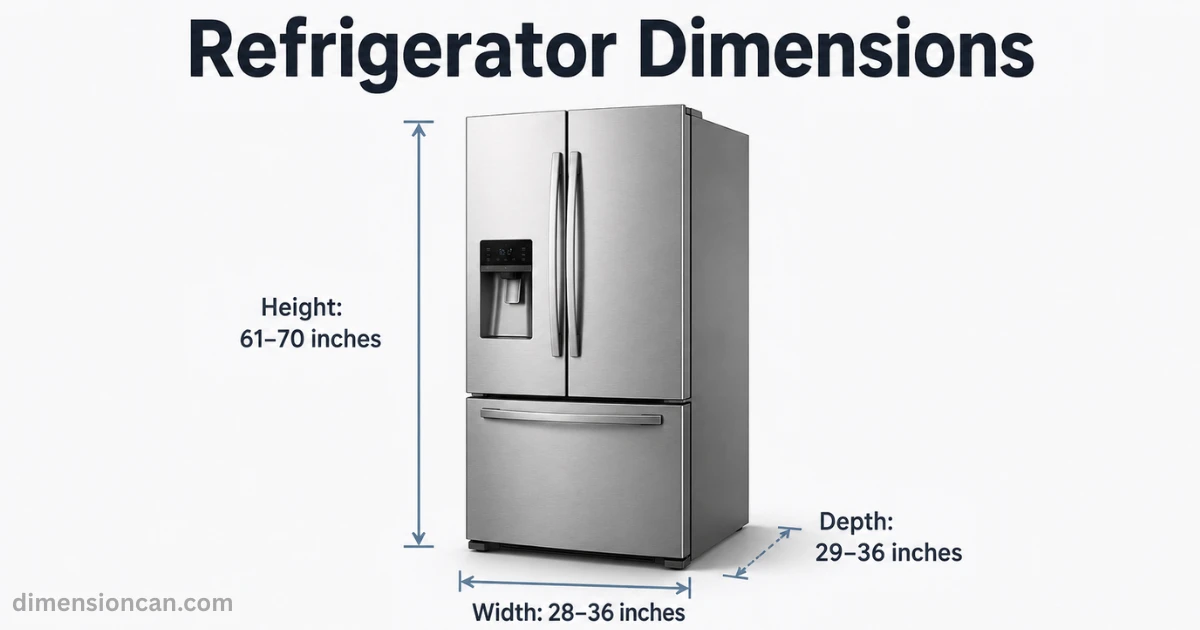
Most standard refrigerators measure 28–36 inches wide, 61–70 inches tall, and 29–36 inches deep. The ideal fridge dimensions depend on your kitchen layout, family size, and the refrigerator style you choose.
This guide breaks down refrigerator sizes by type, by brand, and by depth — so you can measure once and buy right the first time.
Standard Refrigerator Dimensions by Type
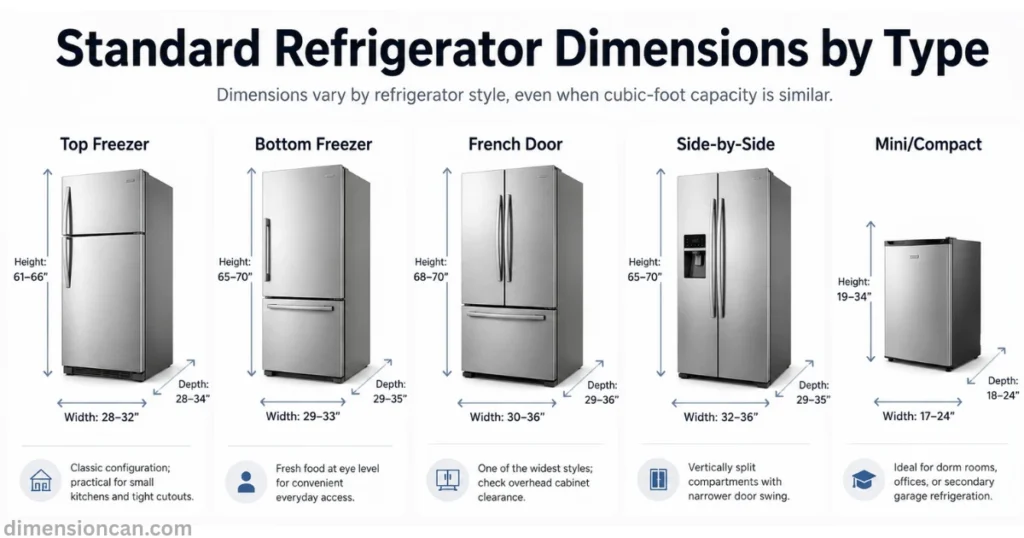
| Type | Height | Depth | Width |
|---|---|---|---|
| Top Freezer | 61″–66″ | 28″–34″ | 28″–32″ |
| Bottom Freezer | 65″–70″ | 29″–35″ | 29″–33″ |
| French Door | 68″–70″ | 29″–36″ | 30″–36″ |
| Side-by-Side | 65″–70″ | 29″–35″ | 32″–36″ |
| Mini/Compact | 19″–34″ | 18″–24″ | 17″–24″ |
Top Freezer Refrigerator Dimensions
Top freezer refrigerators are the classic shape most of us grew up with. They usually run 61 to 66 inches tall and 28 to 32 inches wide.
This is one of the narrowest fridge dimensions on the market, which makes them a smart pick for small kitchens or older homes with tight cutouts.
Bottom Freezer Refrigerator Dimensions
Flip the freezer to the bottom and the height climbs slightly — usually 65 to 70 inches. The trade-off is convenience: your fresh food sits at eye level, so you’re not bending down for everyday items.
French Door Refrigerator Dimensions
French door refrigerators are the widest single-appliance option outside of side-by-side models, often reaching 36 inches wide. They also tend to be the tallest style, so always double-check your overhead cabinet clearance before buying.
Side-by-Side Refrigerator Dimensions
Side-by-side fridges split the fridge and freezer vertically. Their narrower doors (usually half the total width) make them a good fit for kitchens with limited swing space, even though the overall unit isn’t small.
Mini and Compact Refrigerator Dimensions
Compact fridges are the most overlooked category in most sizing guides, yet they’re one of the most searched.
A typical compact unit measures 17 to 24 inches wide and 18 to 34 inches tall — ideal for dorm rooms, offices, or a secondary beverage fridge in a garage.
More Posts:Cornhole Board Dimensions: Regulation Size & Court Setup
Counter-Depth Refrigerator Dimensions
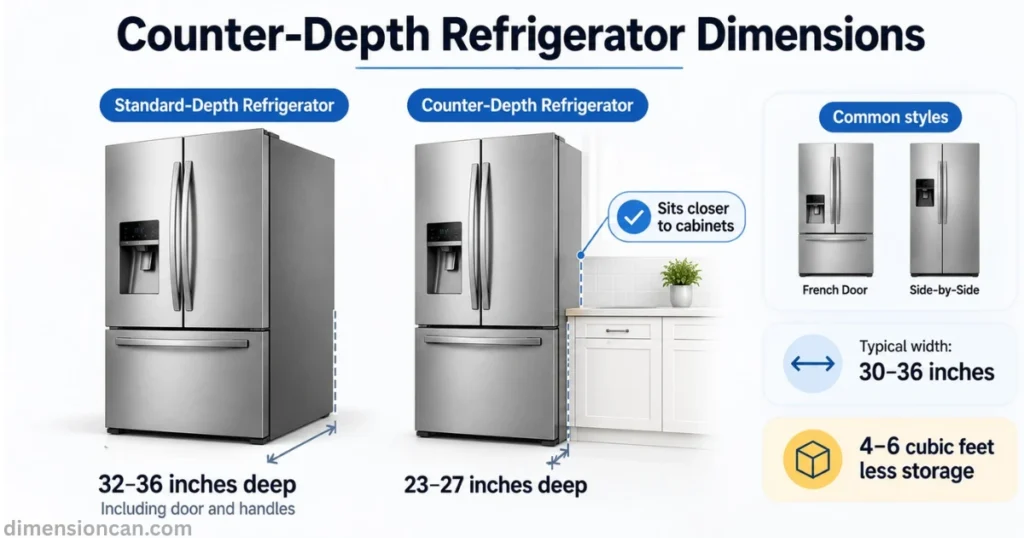
Counter-Depth vs Standard-Depth Refrigerator Dimensions
A standard-depth refrigerator usually measures 32 to 36 inches deep, including the door and handles. A counter-depth refrigerator, by comparison, measures closer to 23 to 27 inches deep — shallow enough to line up with most base cabinets.
Counter-Depth Dimensions by Style
Counter-depth models are most common in French door and side-by-side styles. Widths still land in the standard 30 to 36 inch range, but the shallower body changes how the fridge feels in the room, even though the width stays the same.
Is Counter-Depth Worth the Trade-Off
A counter-depth fridge usually holds 4 to 6 cubic feet less than a standard-depth model of the same width. You gain a sleeker look but lose some storage. If you shop frequently and don’t stockpile groceries, this trade rarely matters.
Refrigerator Dimensions by Brand
Samsung Refrigerator Dimensions
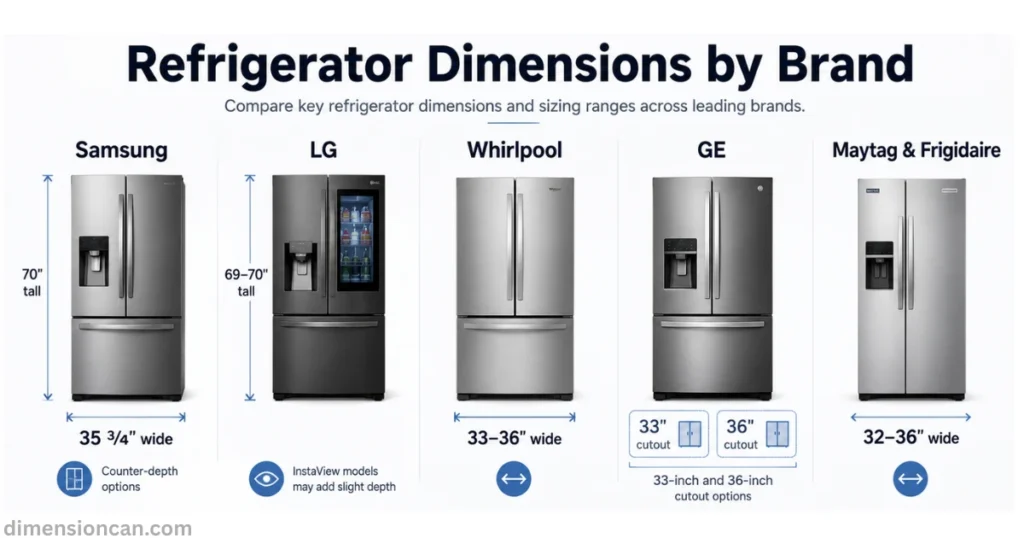
Samsung’s French door lineup commonly runs 35 3/4 inches wide and 70 inches tall, with several models built specifically to fit counter-depth cutouts without losing capacity.
LG Refrigerator Dimensions
LG tends to favor slightly taller cabinets, often 69 to 70 inches, and is known for InstaView door panels that add a fraction of extra depth compared to a plain door front.
Whirlpool Refrigerator Dimensions
Whirlpool’s standard lineup sits closer to 33 to 36 inches wide, with a reputation for slightly more generous interior capacity per inch of exterior footprint.
GE Refrigerator Dimensions
GE offers one of the widest ranges of exact-fit models, including options built for 33-inch and 36-inch cutouts, which makes them a common choice for kitchen remodels replacing an older, non-standard fridge.
Maytag and Frigidaire Refrigerator Dimensions
Maytag and Frigidaire both lean toward dependable mid-range sizing, typically 32 to 36 inches wide, and are frequently chosen for rental properties and starter homes where a predictable footprint matters more than premium features.
What Refrigerator Size Do You Need by Household
Refrigerator Cu Ft by Household Size
A simple, widely used rule of thumb is 4 to 6 cubic feet per person. A household of two typically does fine with 12 to 16 cubic feet, while a family of five or more often needs 25 cubic feet or more.
Matching Cu Ft to Kitchen Dimensions
Bigger cubic footage doesn’t always mean a bigger footprint. A French door counter-depth model can pack in nearly as much capacity as a bulkier side-by-side, just distributed differently inside the cabinet. Match the shape to your kitchen layout first, then check that the capacity fits your household size.
More Posts:Bathtub Dimensions: Standard Sizes, Types, Depth & Clearance Guide
How to Measure for Refrigerator Dimensions
Measuring Width, Depth and Height
Measure the full opening at its narrowest point. Cabinets aren’t always perfectly straight, so check width in three spots: top, middle, and bottom.
Door Swing and Handle Clearance
A refrigerator door needs room to open past 90 degrees for drawers to slide out fully. Leave at least 3 to 4 inches between the hinge side and any wall.
Ventilation Space Requirements
Refrigerators need airflow to run efficiently. Leave roughly 1 inch behind the unit and 1/2 inch on each side. Skipping this step forces the compressor to work harder, which shortens its lifespan over time.
Doorway and Hallway Path Measurements
This step gets skipped constantly, and it causes real delivery headaches. Measure every doorway, hallway turn, and stairwell between the front door and the kitchen — not just the final space where the fridge will sit.
Refrigerator Dimensions FAQ
How cold should a refrigerator be?
A refrigerator should stay between 35 and 38 degrees Fahrenheit. Keeping it below 40 degrees slows bacterial growth, but it should never reach freezing at 32 degrees.
How long do refrigerators last?
Most refrigerators last between 10 and 20 years, depending on brand, usage, and maintenance. Compressors are usually the first major part to fail.
What is the standard refrigerator size in the USA?
The most common standard refrigerator size in the USA is 36 inches wide, 70 inches tall, and 34 inches deep, which fits most kitchen cutouts built in the last two decades.
Are all counter-depth refrigerators the same depth?
No. Counter-depth refrigerator dimensions vary by brand and model, typically landing between 23 and 27 inches deep, not including handles.
Do refrigerator dimensions include the doors and handles?
Usually not. Most published fridge dimensions measure the cabinet body only. Always add 1 to 2 inches for handles and door swing space when measuring your kitchen.
How much clearance does a refrigerator need on the sides and back?
Leave about 1/2 inch on each side and 1 inch at the back for proper airflow. Some built-in models need more, so always check the manufacturer’s installation guide.
Conclusion
Refrigerator dimensions aren’t one-size-fits-all, and treating them that way is the most common mistake buyers make. The right fridge size depends on your kitchen’s exact cutout, the style you choose, the brand you buy, and how many people you’re feeding.

James Walker is a content researcher and writer specializing in dimensions, measurements, size comparisons, and conversion topics. He creates clear, practical, and easy-to-understand guides that help readers visualize and understand real-world measurements.